Why Tanzania’s Smallest Export Crop Processes More of Itself Than Its Biggest One
Published 28 September 2026 · Commodities.tz Editorial
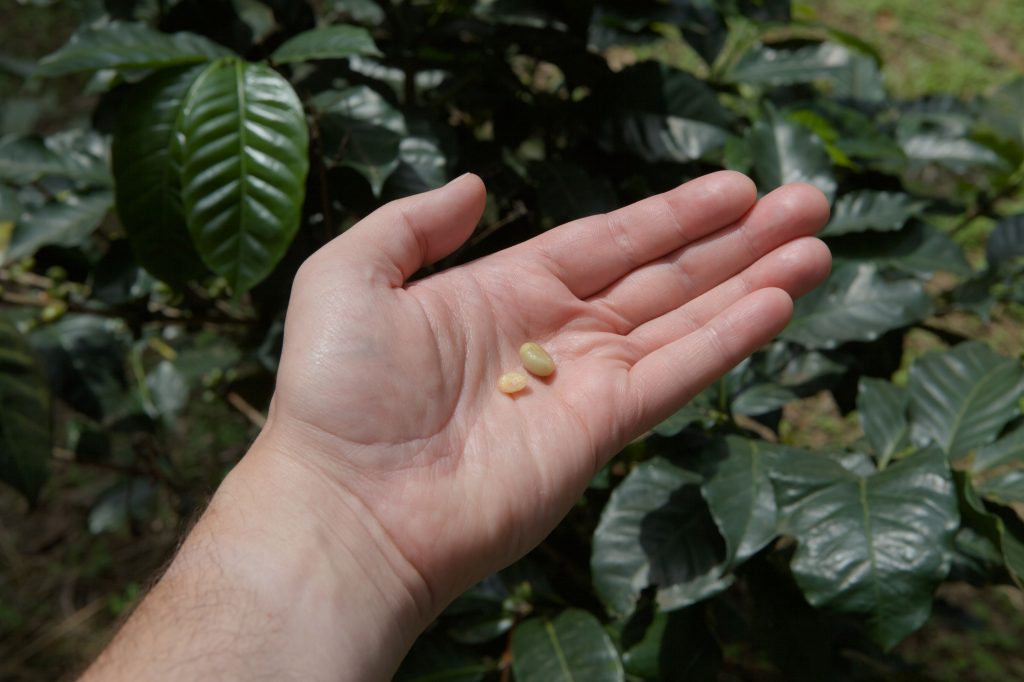
Tanzania grew about 15,000 tonnes of cocoa in 2024 — roughly 0.3% of world output — and has two confirmed domestic bean-to-bar chocolate makers. It grew somewhere north of 365,000 tonnes of cashews in the same window, has been trying by policy design to stop exporting them raw for more than twenty years, and still processes only a low single-digit percentage domestically. The smaller crop has more finished-product manufacturers than the bigger one. That’s the pattern worth explaining, and it holds up once you look at coffee, cloves, vanilla and honey too: value addition in Tanzanian agriculture doesn’t track crop size, export earnings, or policy attention. It tracks something else — and the “something else” looks different for almost every crop.
Cashew: the policy apparatus that hasn’t moved the number
Cashew is Tanzania’s test case for whether trade policy alone can force processing, and the record is not encouraging. A 2004 sector review found domestic processors handling only a few thousand tonnes a year against a harvest already above 100,000 tonnes. Two decades on, official figures still put processed volume at around 5% of a crop that has since grown past 230,000 tonnes — and by one more recent estimate, against a 365,000-375,000-tonne season, domestic processing capacity is closer to 42,000 tonnes against a stated national target of 700,000 tonnes, implying something nearer 2% actually gets processed at home in a record year. Either way, the overwhelming majority — 95-98% by these accounts — still leaves the country raw, mostly to India and Vietnam, which resell finished kernels to Europe at several times the price Tanzania was paid.
The government has not been passive about this. Raw cashew exports carry a levy of 15% of FOB value or USD 160 per tonne, whichever is higher, run through a licensing system (ATMIS) that gates who can even buy nuts for export. Levies structured this way are, per trade guidance on the mechanism, typically meant to make raw export less attractive relative to adding value domestically. A Primary Market System introduced in 2020/21 tried to give processors more direct access to farmer cooperatives, and a new industrial cluster at Nanyamba is aimed at over 300,000 tonnes of processing capacity by 2026/27. None of it has moved the processed share much. The explanation offered by the numbers themselves is blunt: raising an export tax does little if there is nowhere for the diverted nuts to go. A price signal can’t substitute for shelling factories, drying infrastructure and trained labor that don’t yet exist at the scale the crop demands. Tanzania’s own crop has also been fighting itself on quality — a record 2026 harvest produced a wave of lots with poor “outturn” (kernel yield per bag) because moisture control and drying happen at farm and society level, upstream of the auction system that only fixes price, not quality. The full numbers behind why the raw-export share hasn’t moved are on cashews.tz, and the outturn quality problem is broken down separately there too. The licensing and levy mechanics themselves are covered on export.tz.
Cacao: a much smaller crop, and a narrower kind of success
Cacao’s better showing needs a caveat before it’s used as a counter-example: the “value addition” that actually exists is upstream of chocolate, not chocolate itself. Kokoa Kamili, founded in 2013, runs what’s described as Tanzania’s only commercial centralized cacao fermentary, buying wet beans from an estimated 2,500-3,000 smallholders around Mbingu in the Kilombero Valley and fermenting and drying them under controlled conditions. That process is the reason Tanzanian cacao became a name-checked, prized single-origin ingredient on bars made by companies like Dandelion and Omnom — but the roasting, grinding, conching and tempering happen entirely outside the country. As the site’s own reporting puts it: Tanzania grows cacao; it does not, in any real industrial sense, make chocolate — not yet. Two confirmed domestic bean-to-bar manufacturers exist (Munny Chocolate, sourcing from Tanga, Mbeya and Morogoro; and Chocolate Mamas/Gourmet Tanzania Chocolate Ltd., whose current operating status is unconfirmed), plus retail-facing chocolate in Zanzibar aimed largely at tourists.
What’s changing now is upstream capacity, not downstream manufacturing, and it’s being pushed by a price shock rather than a processing mandate: farmgate cocoa prices in Tanzania fell from roughly TZS 32,000/kg to TZS 5,540/kg over 2025-26 as global oversupply (largely from Ivory Coast) hit the market, and that collapse turned processing into smallholder politics. The regulator’s response is a five-point plan — drying infrastructure expanding from 7 to 20 facilities by mid-2026, a US$30 million memorandum of understanding signed with Corus International in April 2025, and a target of 80,000 tonnes of cocoa by 2030, roughly five times current volumes. On the ground, two processing plants are under construction in Mbeya region (Rungwe and Kyela produce 90-95% of Tanzania’s cocoa): one financed by the Kyela Cocoa Farmers’ Cooperative Union through a self-imposed levy of TZS 50 per kilogram on farmers’ own cocoa sales — a 2024 pilot raised over TZS 500 million this way — and a second courting outside investors through a special-economic-zone designation. That financing contrast is worth sitting with: cashew’s levy is a government-collected export tax aimed at discouraging raw sales; cacao’s new levy is a cooperative’s own money, pooled by farmers to build capacity they’ll control. Whether that difference in who holds the capital turns out to matter for outcomes is not yet demonstrated — the plants aren’t finished — but it’s a structurally different bet than anything tried in cashew so far. The full accounting of who is actually making chocolate in Tanzania is on chocolate.tz, along with how the fermentary model built Tanzania’s reputation as an origin, the Rungwe and Kyela plants in more detail, the government’s five-point push, and what chocolate actually exists in Zanzibar.
Coffee: the value-addition story that basically doesn’t exist
Coffee is the clean control case: no meaningful policy push to process locally, and no meaningful local processing. Trade reporting citing industry data puts domestic consumption at around 7% of Tanzania’s coffee production — up from roughly 2% a few years earlier — with the balance exported as green beans, regulated through Tanzania Coffee Board export licensing. Green bean exports are projected to keep rising, from an estimated 1.25-1.31 million 60-kilo bags in 2024/25 toward 1.36 million in 2025/26. There is no dedicated domestic-roasting policy initiative comparable to cashew’s levy-and-cluster approach or cacao’s cooperative-financed plants showing up in trade coverage, and the network’s own coffee coverage — on grading, on the arabica/robusta split, on a small washed-versus-natural processing experiment in the south — doesn’t include one either, which is itself informative: there isn’t a “why doesn’t Tanzania roast its own coffee” story to tell yet because the roasting industry barely exists.
Cloves, vanilla and honey: three very different shapes of “thin”
Cloves are Zanzibar’s leading export by value — export volume jumped from roughly 700 tonnes to about 7,000 tonnes in the period reported, earning $44.6 million and making up roughly 63% of Zanzibar’s total goods exports. But trade classification data shows the overwhelming share of that volume moving under the tariff code for whole, dried cloves rather than clove oil or other processed derivatives — meaning the crop’s export success is a volume-and-price story, not a processing one. Whether Zanzibar has meaningful clove-oil distillation capacity beyond what’s already reflected in that trade data isn’t something this reporting can confirm one way or the other from a verified primary source.
Vanilla is the genuine outlier, but a narrow one. Natural Extracts Industries operates three centralized curing sites across Tanzania and Uganda plus what it describes as the region’s only local vanilla extraction plant, based in Tanzania and FDA-registered, sourcing from roughly 13,000 partner farmers across eight zones. That’s real curing-through-extraction value addition happening inside the country — but it’s the output of a single vertically integrated private company, not a policy shift or a cooperative movement, and Tanzania’s overall vanilla export volumes remain tiny by comparison with cashew, cacao or cloves.
Honey shows an early, small-scale version of the same shift seen bigger in cacao: producers moving from raw commodity sales toward “processed and branded” product for export. Tanzania produced 33,861 tonnes of honey in 2024 but exported only 951.6 tonnes of it that year, rising to 1,596.8 tonnes in 2025 as export earnings grew roughly 68% (from TZS 11.4 billion to TZS 19.2 billion); cumulative export earnings for 2021-2024 were reported at TZS 69.1 billion. Government estimates put the country’s production potential at 138,000 tonnes — meaning even the raw-honey side of the industry is running far below capacity, let alone the processed side.
| Commodity | Processed locally? | Why (one line) |
|---|---|---|
| Cashew | No | ~95-98% exported raw; two decades of levies and licensing haven’t closed the shelling-capacity gap |
| Cacao | Limited | Fermentation/drying now world-class; actual bar-making is just 1-2 confirmed domestic makers |
| Coffee | No | ~93% leaves as green beans; domestic consumption ~7% of production, no processing-policy push found |
| Cloves | No (as far as verifiable) | Export volumes classify overwhelmingly as whole, dried cloves, not oil or other processed forms |
| Vanilla | Limited (niche) | One vertically integrated private firm cures and extracts inside Tanzania; total volumes are small |
| Honey | Limited (emerging) | Exports are shifting toward branded/processed product, but cover only a few percent of production |
The pattern, stated plainly
Scale doesn’t predict processing success in Tanzania — if anything it runs backwards. Cashew is the biggest, most policy-targeted crop and the least processed; cacao is a rounding error globally and has the most (if still narrow) domestic manufacturing. What seems to correlate better, on the evidence gathered here, is capital intensity and who controls it: cashew needs large mechanical shelling infrastructure that neither an export tax nor a licensing regime has been able to conjure into existence, while cacao’s actual breakthrough — fermentation and drying — is a lower-capital, farm-adjacent process that a farmer cooperative could self-finance through its own per-kilogram levy. Coffee shows what happens with neither capital nor a push. Honey and cloves show early-stage or purely volume-driven export growth without a processing story behind it yet. Vanilla shows that a single well-capitalized private firm can do in one crop what two decades of public policy hasn’t done in another. None of this proves that financing structure is the deciding variable — the cacao plants aren’t even finished yet — but it’s the clearest difference visible across six crops otherwise defined mostly by how little they have in common.
- chocolate.tz — "Tanzania's Bean-to-Bar Makers: Who Is Actually Making Chocolate Here" — https://chocolate.tz/tanzanias-bean-to-bar-makers-who-is-actually-making-chocolate-here/ — accessed 2026-09-27
- chocolate.tz — "Rungwe and Kyela: Inside the Farmer-Funded Processing Plants" — https://chocolate.tz/rungwe-and-kyela-inside-the-farmer-funded-processing-plants/ — accessed 2026-09-27
- cashews.tz — "Tanzania Keeps Trying to Stop Exporting Raw Cashews. The Numbers Show Why It Hasn't." — https://cashews.tz/tanzania-keeps-trying-to-stop-exporting-raw-cashews-the-numbers-show-why-it-hasnt/ — accessed 2026-09-27
- export.tz — "Exporting Raw Cashew Nuts from Tanzania: Licenses, ATMIS and the Levy" — https://export.tz/exporting-raw-cashew-nuts-from-tanzania-licenses-atmis-and-the-levy/ — accessed 2026-09-27
- Natural Extracts Industries Ltd — "Heart of East Africa — Viva Vanilla" — https://nei-ltd.com/viva-vanilla/ — accessed 2026-09-27
- The Citizen (Tanzania) — "Local honey producers move up value chain as export demand surges" — https://www.thecitizen.co.tz/tanzania/news/national/local-honey-producers-move-up-value-chain-as-export-demand-surges-5423906 — accessed 2026-09-27
- Tanzania Keeps Trying to Stop Exporting Raw Cashews. The Numbers Show Why It Hasn’t.
- Tanzania’s Bean-to-Bar Makers: Who Is Actually Making Chocolate Here
- Rungwe and Kyela: Inside the Farmer-Funded Processing Plants
- Exporting Raw Cashew Nuts from Tanzania: Licenses, ATMIS and the Levy
- Exporting Agricultural Commodities from Tanzania