Why Tanzania Has 18 Coffee Exporters, 17 Cashew Traders — and Only 3 Companies Touching Cloves
Published 28 September 2026 · Commodities.tz Editorial
The thesis
Tanzania does not have one export licensing system for commodities — it has several, and which one a crop falls under is the single biggest predictor of how many companies you’ll find trading it. Coffee has 18 businesses in our own supplier directory. Cashew has 17. Clove has 3, and one of those three is a legally mandated monopoly. Cardamom has 2. This isn’t random. It maps directly onto four structural forks: whether the crop is under a state marketing monopoly or a liberalized licensing regime, how much of the trade runs through cooperative unions with a century of institutional history, how capital-intensive the processing step is, and how large the crop’s overall volume and export value are. Put a commodity through that four-part filter and you can predict, roughly, how thick or thin its trading market will be — before you ever count a single license.
What we counted, and what it can and can’t tell you
Commodities.tz maintains its own supplier directory — businesses we’ve identified, categorized by type (producer, cooperative, processor, trader, exporter, association), and in a number of cases source-confirmed against an external reference, not just self-reported. It is not a government registry and it does not capture every license the Tanzania Coffee Board (TCB), Cashewnut Board of Tanzania (CBT), or ZSTC has ever issued — it’s a curated sample built for a trade directory, weighted toward businesses active enough to be findable and verifiable. Treat the counts below as directional evidence of market thickness, not a census.
| Commodity | Suppliers in directory | Type breakdown |
|---|---|---|
| Coffee | 18 | 6 exporter, 3 processor, 3 trader, 3 cooperative, 3 producer |
| Cashew | 17 | 6 processor, 4 exporter, 3 cooperative, 3 trader, 1 association |
| Vanilla | 6 | 2 producer, 2 exporter, 1 processor, 1 cooperative |
| Cacao | 5 | 3 processor, 2 cooperative |
| Honey | 5 | 3 processor, 1 exporter, 1 association |
| Spice (mixed) | 4 | 4 exporter |
| Chocolate (processed) | 4 | 4 processor |
| Clove | 3 | 2 exporter (incl. ZSTC), 1 trader |
| Cardamom | 2 | 1 exporter, 1 trader |
Coffee and cashew together account for 35 of the directory’s 51 entries — the two crops that also happen to be the two with liberalized, competitively licensed marketing systems and century-old cooperative infrastructure. Clove and cardamom sit at the other end with a combined 5 entries. That’s the observed fact. The explanation for why requires walking commodity by commodity.
Coffee: liberalized, licensed, and full of specialists
Coffee’s thick market is a licensing-regime story with a cooperative history layered on top. Under the Coffee Industry Act, 2001, the Tanzania Coffee Board issues separate licenses for buying, processing, roasting, warehousing, central pulping, and exporting — anyone who meets the Board’s conditions can apply for one. That’s an open, multi-license system, not a single gate.
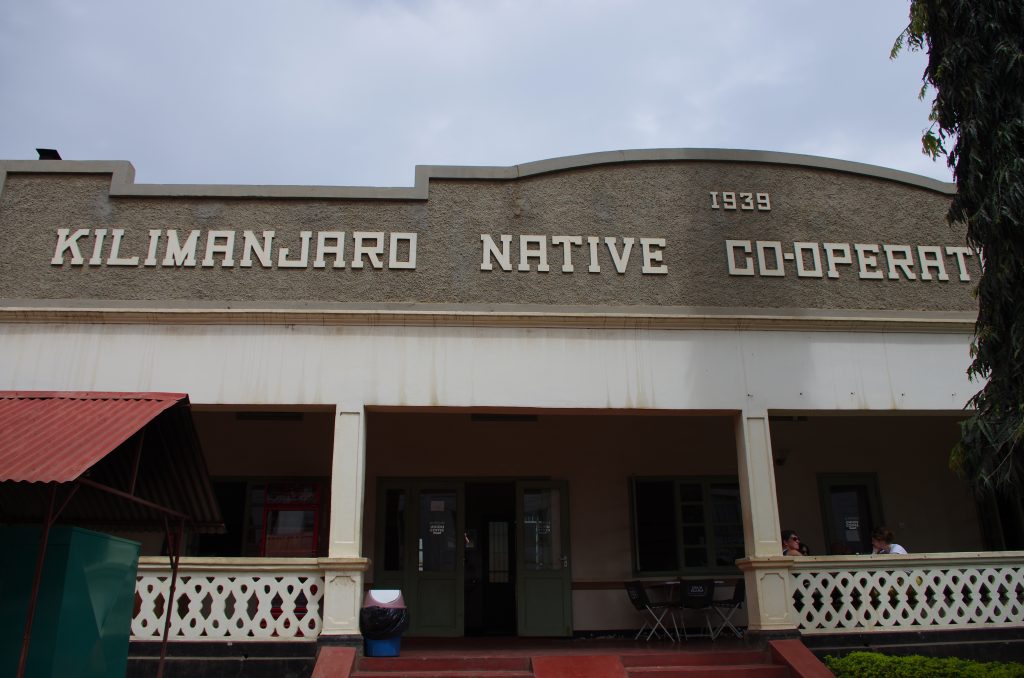
It wasn’t always this way. Coffee cooperatives date to 1925, when the Kilimanjaro Native Planters’ Association formed to get farmers a better price; it was followed in 1930 by the Kilimanjaro Native Co-operative Union (KNCU), founded by Charles Dundas, still headquartered in Moshi, still described as the largest buyer of Kilimanjaro smallholder coffee, and one of Africa’s oldest surviving coffee cooperatives. Cooperative unions ran coffee marketing for decades until 1977, when the government dissolved them and handed control to a state Coffee Authority. Reforms in 1990 and 1994-95 reversed that: marketing was liberalized and cooperative unions came back alongside private licensed buyers. The result is a market with both lineages active at once — our directory shows 3 cooperative entries and 6 exporters under “coffee,” plus processors and traders. It’s a market built for many participants because the license structure and the institutional history both point that way.
Cashew: liberalized, but funneled through one trading mechanism
Cashew tells a similar liberalized-licensing story but with a different trading mechanism. The Cashewnut Board of Tanzania (CBT) issues licenses to buyers, and — distinctively — separate licenses depending on whether a buyer wants to purchase for local processing or for raw-nut export; a single company can hold both. Since the mid-2010s, nearly all cashew has moved through a mandatory warehouse-receipt and auction system, run with the Tanzania Mercantile Exchange (TMX): farmers deposit crop at licensed warehouses via their cooperative societies (AMCOS), and licensed buyers — domestic processors and international exporters alike — bid competitively. A parallel “primary market” system introduced in 2021 lets licensed local processors buy AMCOS crop outside the auction, specifically to push more processing onshore.
That’s two open, competitive marketing channels layered on a licensing regime that doesn’t cap participant numbers — which is consistent with cashew being the second-thickest market in our data: 17 suppliers, split fairly evenly across processor, exporter, cooperative, and trader types. Scale also matters here: raw cashew production reached 528,263 tonnes in the 2024/25 season, of which 406,362 tonnes were sold through TMX’s digital auctions alone, generating TZS 1.46 trillion in that channel. A crop moving that much volume can support many mid-sized specialist traders rather than concentrating in a handful of large ones — a cardamom market worth barely over half a million dollars a year, as below, structurally cannot.
Clove: the one deliberate exception
Clove is not a thin market because nobody wants to trade cloves. It’s thin because Tanzanian law makes it illegal for anyone but one company to buy them from a Zanzibar farmer. Since 1966, the Zanzibar State Trading Corporation (ZSTC) has held a government-assigned monopoly over clove marketing, put in place after the Zanzibar Revolution nationalized land and trade — a status that remains in force today. That’s a legal fact, not a market outcome, and it fully explains why our directory shows only 3 clove entries at all, one of which is ZSTC itself. We’ve covered exactly how that system works, and the black-market pressure it creates when it prices below regional smuggling routes, in a dedicated deep-dive — see “Why You Can’t Just Buy Cloves Directly From a Zanzibar Farmer: Inside the ZSTC System” on clove.tz — so we won’t re-litigate it here. What’s notable for this piece is what shows up around ZSTC in the directory: the two other clove entries, Viridium Tanzania Limited and Badara Export Company, are not clove specialists — they’re generalist trading houses that also appear under cardamom and (in Viridium’s case) spice and vanilla too. When a market is legally capped at one buyer, the handful of private companies still listed around its edges tend to be diversified traders dabbling across several thin commodities at once, not dedicated clove operations — because there’s no room to specialize in a market you can’t actually buy the core product in.
Vanilla and cardamom: no monopoly, but too small and too volatile to attract specialists
Vanilla and cardamom show that a thin market doesn’t require a legal monopoly — low volume, price volatility, and the absence of a dedicated marketing board can produce the same effect. Neither crop has a Coffee-Board- or Cashewnut-Board-style regulator running a licensing and auction system; there’s no equivalent gate to walk through, but also no equivalent institutional infrastructure connecting farmers to buyers. Trade-data aggregator Tridge puts Tanzania’s cardamom export value at $560,514 in 2023, down sharply from $1,709,916 the year before — a swing that size, on a crop this small, is a hard base for any trader to build a specialist business on. Vanilla shows the same volatility from a different angle: farmers interviewed for a 2025 report described watching the price collapse from roughly TZS 50,000/kg in 2003 to about TZS 1,500/kg today — “it barely covers the cost of production” — with the same report noting vanilla, unlike coffee or maize, has no stable local market to fall back on when export demand dries up, and that “the ones who make money from vanilla are not the farmers… it’s the traders, the exporters, the middlemen.” Big price swings and small absolute volumes make vanilla and cardamom unattractive for a company to specialize in — better to be a generalist trader who can also move cardamom, clove, and spice through the same relationships, which is exactly the profile our directory shows for the two companies (Viridium, Zanj Spice) that touch both vanilla and one of these other thin crops. One bright spot: the Muleba Vanilla Development Association (MVADA) is a real farmer cooperative in Kagera working the opposite structural fix that helped coffee and cashew — organizing supply-side bargaining power where no marketing board exists to do it for them.
The pattern, stated plainly
Four variables explain almost all of the spread in our data. First, licensing regime: coffee and cashew have open, multi-category licensing that lets many businesses qualify; clove has a single statutory monopoly that legally excludes everyone else from buying domestically. Second, cooperative history: coffee and cashew both run through AMCOS-style cooperative societies with decades of institutional continuity (KNCU traces to 1925); vanilla and cardamom mostly don’t, beyond isolated efforts like MVADA. Third, capital intensity and specialization: thin markets (clove, cardamom, vanilla) are serviced by generalist trading houses spanning several niche crops at once, while thick markets (coffee, cashew) support single-commodity specialists — a distinction visible directly in our directory’s multi-commodity supplier list. Fourth, scale: cashew’s 528,263 tonnes and TZS 1.46 trillion moved through its auction system alone can support 17 distinct trading businesses in a way cardamom’s $560,514 in total 2023 export value simply cannot. None of this is a value judgment about which system is “better” for farmers — ZSTC’s monopoly, for instance, comes with farmer support programs (seedlings, buying centers, soft loans) that a fragmented private market wouldn’t necessarily provide, and liberalized markets have their own well-documented risks of price volatility and buyer power imbalances. It’s a structural explanation, not a verdict.
- Commodities.tz internal supplier directory — wp_czn_suppliers / wp_czn_supplier_commodities tables, queried directly via wp-cli — accessed 2026-09-27/28
- Tanzania Laws — Coffee Industry Act (No. 23 of 2001), licensing provisions — https://tanzanialaws.com/statutes/principal-legislation/53-coffee-industry-act — accessed 2026-09-27
- Wikipedia — "Coffee production in Tanzania" (cooperative history, 1925/1977/1990-95) — https://en.wikipedia.org/wiki/Coffee_production_in_Tanzania — accessed 2026-09-27
- Wikipedia — "Kilimanjaro Native Cooperative Union" — https://en.wikipedia.org/wiki/Kilimanjaro_Native_Cooperative_Union — accessed 2026-09-27
- African Cashew Alliance — "More Volume, Less Control: Tanzania's Cashew Growth Tests Its Own System" — https://www.africancashewalliance.com/en/news-and-info/cashew-news/more-volume-less-control-tanzanias-cashew-growth-tests-its-own-system — accessed 2026-09-27
- The Citizen (Tanzania) — "New cashewnut marketing system: Success and challenges" — https://www.thecitizen.co.tz/tanzania/business/-new-cashewnut-marketing-system-success-and-challenges-4137078 — accessed 2026-09-27
- TanzaniaInvest — "Cashew" overview (2024/25 production and TMX auction figures) — https://www.tanzaniainvest.com/cashew — accessed 2026-09-27
- Tridge — Tanzania cardamom trade intelligence — https://www.tridge.com/intelligences/cardamom/TZ — accessed 2026-09-27
- Pan African Visions — "Vanilla's Broken Promise: How a Once-Golden Crop Became a Struggle for Survival in Tanzania" — https://panafricanvisions.com/2025/03/vanillas-broken-promise-how-a-once-golden-crop-became-a-struggle-for-survival-in-tanzania/ — accessed 2026-09-27
- Tanzania Smallholder Farmers Association — MVADA cooperative profile — https://tanzasfa.com/index.php/mvada/ — accessed 2026-09-27