Kagera’s Vanilla Decade: How a Coffee Region Became Tanzania’s Vanilla Country
Published 26 September 2026 · Commodities.tz Editorial
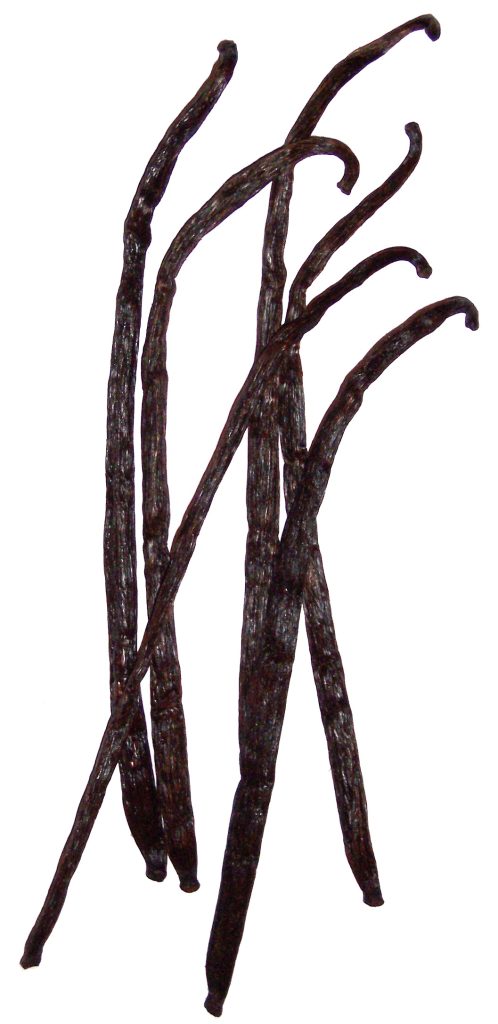
Ask most buyers where Tanzanian vanilla comes from and the guess is usually Zanzibar, on the strength of the island’s clove reputation. It’s the wrong island and, mostly, the wrong region. The bulk of Tanzania’s vanilla is grown roughly 1,000 kilometres away, in the highlands and lake-shore districts of Kagera Region in the northwest — Muleba, Bukoba, Karagwe, Kyerwa — with secondary production around Kilimanjaro, Morogoro, Njombe, and Mbeya. These are coffee and banana country, not spice-island country, and that distinction matters: Tanzanian vanilla is largely a story of coffee farmers hedging into a new crop, grown as an understorey vine on the same farms where they grow bananas for shade.
A crop planted on borrowed shade
Vanilla is a climbing orchid that needs a host tree or trellis, filtered light, and steady humidity — conditions Kagera’s banana-and-coffee shambas already provided. According to Tanzania’s Ministry of Agriculture figures reported by Anadolu Agency, national vanilla production rose from 229.8 tonnes in 2015 to 1,949 tonnes in 2020, an increase driven substantially by smallholders in Kagera switching acreage, or at least attention, from coffee to vanilla vines planted among their existing trees.
The pull was price. Clementina Buberwa, a farmer in Isingiro village, Kyerwa district, told Anadolu Agency in October 2021 that she earned 23.5 million Tanzanian shillings (about $5,217 at the time) from a single season of cured vanilla — enough that she describes working 14-hour days during the harvest as worth it. Each vine, she said, produces 7 to 15 kilograms of green beans once it reaches maturity at three to four years old. In Njombe, further south, farmer Agnesta Mnyifuna reported harvesting 15 to 20 kilograms of pods per season in the same period, with quality beans fetching $250–300 per kilogram and smaller pods around $100 per kilogram — she earned roughly 9.2 million shillings ($4,000) from her 2019 harvest.
Processors followed the farmers. Natural Extracts Industries (NEI), founded in Moshi in 2011, started with 20 smallholders and had grown its sourcing network to more than 6,000 farmers across Kilimanjaro, Morogoro, and Kagera by the time of its most recent reporting to the Common Fund for Commodities, an intergovernmental commodity-development institution. Those farmers now collectively hold over 500,000 vanilla vines. NEI’s own data shows the swing in fortunes starkly: participating households earned an average of $215 from vanilla in 2020, against $30–60 a month from the traditional crops — coffee, mostly — that vanilla was displacing.
The same farmers, four years later
By March 2025, the picture in Kagera had reversed. Pan African Visions, reporting from Muleba district, quoted local prices that had collapsed from 50,000 shillings per kilogram in 2003 to roughly 1,500 shillings per kilogram — against a coffee price, at the same date, of about 5,000 shillings per kilogram. Farmer Victor Ishengoma, who built his house and paid his children’s school fees from vanilla earnings on his three-acre Kimbugu farm, told the outlet he was no longer sure he could afford inputs for the next season. His neighbour Wilfaston Ishengoma had already stopped expanding his vanilla plot and returned his attention to coffee. Agnesta Mnyifuna — the same Njombe farmer who reported a $4,000 harvest in 2019 — was, by 2025, diversifying out of vanilla altogether.
The collapse tracks the global cycle: Madagascar’s benchmark price, which peaked near $600 per kilogram in 2018, had fallen to roughly $250–305 per kilogram by 2020 as Malagasy output recovered from the cyclone-driven shortages that caused the spike in the first place, according to Food Business News reporting from that period. Tanzanian farmgate prices, several rungs down a longer supply chain, absorbed that shock disproportionately.
One detail is worth flagging for buyers rather than smallholders: farmgate crash and finished-product price are not the same number. Even as Muleba farmers described 1,500-shilling-per-kilogram raw prices in early 2025, a separate 2025 market analysis (Uchumi360) put premium cured Tanzanian vanilla at up to 800,000 shillings per kilogram — consistent with global cured-bean prices once converted at prevailing exchange rates. The gap between what a farmer receives for green pods and what a cured bean fetches at export is where curing, grading, and export contracts do their work, and it is also where most of the value in this supply chain currently sits — a long way from Kagera’s banana shade.
- Anadolu Agency, "Tanzanian farmers choose vanilla over coffee for profits" (republished by Yeni Şafak, 27 October 2021) — https://www.aa.com.tr/en/africa/tanzanian-farmers-choose-vanilla-over-coffee-for-profits/2404459 — 2026-09-26
- Pan African Visions, "Vanilla's Broken Promise: How a Once-Golden Crop Became a Struggle for Survival In Tanzania" (March 2025) — https://panafricanvisions.com/2025/03/vanillas-broken-promise-how-a-once-golden-crop-became-a-struggle-for-survival-in-tanzania/ — 2026-09-26
- Common Fund for Commodities, "NEI – Fostering livelihoods of vanilla farmers in Tanzania" — https://www.common-fund.org/nei-fostering-livelihoods-vanilla-farmers-tanzania — 2026-09-26
- Food Business News, "Vanilla prices fall more than 50% from highs of 2018" (8 June 2020) — https://www.foodbusinessnews.net/articles/16183-vanilla-prices-fall-more-than-50-from-highs-of-2018 — 2026-09-26
- Uchumi360, "Tanzania's Vanilla Potential: From Niche Crop to Global Opportunity" (2025) — https://uchumi360.com/agribusiness/crop-farming/tanzanias-vanilla-potential-from-niche-crop-to-global-opportunity — 2026-09-26