The Cut Test: How Cocoa Buyers Actually Judge a Tanzanian Bean
Published 26 September 2026 · Commodities.tz Editorial
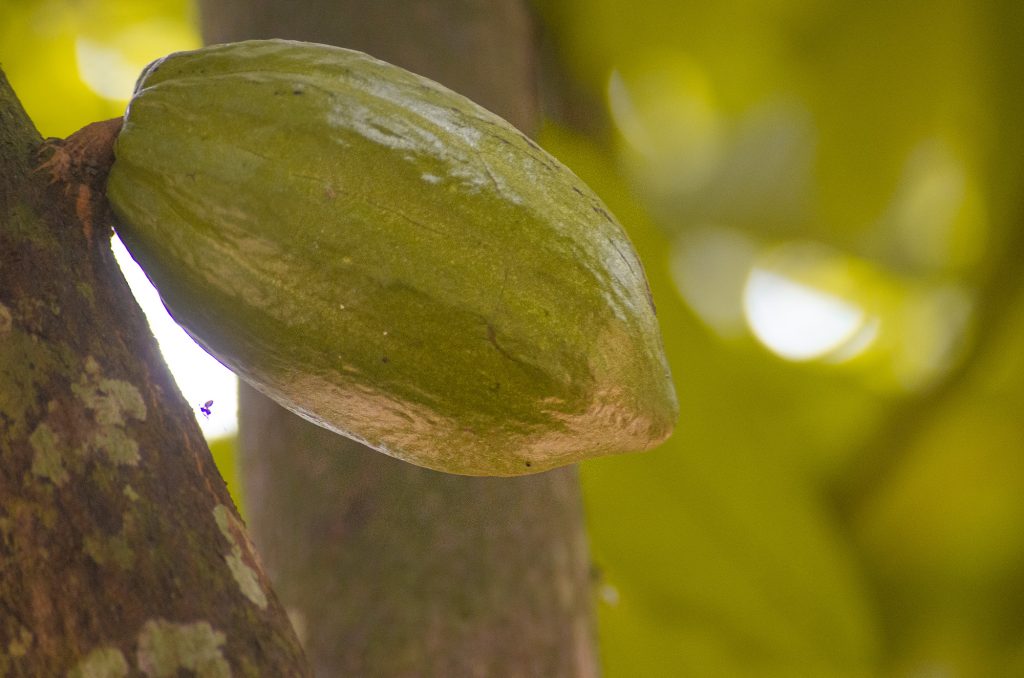
Cocoa is not graded by cupping or tasting at the point of export — it’s graded with a knife. Understanding the mechanics of that “cut test,” and what specifically pushes a Tanzanian lot above or below the Grade 1 threshold, tells a buyer far more than any origin-story marketing about what they’re actually purchasing.
How the cut test works
Graders take a random sample of beans — general international practice targets around 100 beans per 100-gram sample for African-origin cocoa — and slice each one in half lengthwise to inspect the internal color and texture. Beans are then tallied by defect type: moldy (visible fungal growth inside the bean), slaty (grey, hard, unfermented interior — a sign fermentation didn’t run long enough or evenly enough), insect-damaged, germinated or flat. The percentages of each defect type, combined with the total bean count per 100 grams (a proxy for bean size — more beans per 100g means smaller beans), determine the grade.
What separates the grades
Under widely used international quality standards, Grade 1 cocoa is capped at under 3% moldy beans and under 3% slaty beans. Grade 2 allows considerably more slack — up to 4% mold and as much as 8% slaty beans. Beyond that, general regulations applied to African-origin cocoa call for no more than 5% total defective beans to qualify as sound, sellable cocoa at all. A lot that fails even the Grade 2 thresholds isn’t rejected outright so much as it gets priced as “fair average quality” or worse — the defect percentages are the primary lever the whole pricing structure runs on.
Where the defects actually come from
Slaty beans and mold are both fermentation-and-drying problems, not harvest problems — which means they are largely preventable with process control, not luck. Under-fermentation (too short, too cool, or too inconsistent) leaves beans slaty. Drying too slowly, or drying wet beans in contact with each other without enough airflow, invites mold. Both defects are far more common when fermentation and drying happen at individual farm level, where a smallholder household is guessing at timing and moisture without instruments, than when it happens under controlled, monitored conditions.
Two real Tanzanian interventions aimed at exactly this problem
Kyela District, which supplies roughly 80% of Tanzania’s cocoa, illustrates the farm-level version of the problem and a direct attempt to fix it. In 2025 the Kyela Cocoa Farmers’ Cooperative Union used pilot revenue from a self-imposed levy to distribute 40 moisture meters and 40 digital weighing scales to primary agricultural cooperative societies — instruments aimed squarely at the two variables (drying endpoint and consistent weighing/pricing) that most directly affect mold risk and buyer trust in the cut-test outcome.
In the Kilombero Valley of Morogoro Region, the fermentery Kokoa Kamili takes a more structural approach: rather than train thousands of individual farmers to ferment correctly, it buys unfermented “wet” beans directly from farmers and performs fermentation and drying itself, at scale, under monitored conditions — a six-day ferment in tiered wooden boxes followed by full sun-drying on raised tables. By controlling temperature, acidity and moisture centrally rather than relying on thousands of individual farm-level attempts, the company can produce more consistently high-grade beans than farm-processed cocoa from the same region historically achieved — beans that have gone on to reach specialty chocolate makers in North America, Europe and the UAE.
What buyers should ask
For anyone sourcing Tanzanian cocoa, the single most informative question is not “what grade is this” but “who fermented and dried it, and how.” A cut-test grade is a snapshot of an outcome; whether that outcome was produced by a monitored central facility or by thousands of individual smallholders with no instruments is the actual predictor of whether the next container will grade the same way.
- Achieving Cocoa Trade Quality Standards - The Bean Count Parameter — The Cocoa Post — https://thecocoapost.com/achieving-cocoa-trade-quality-standards-the-bean-count-parameter/ — 2026-09-26
- Cocoa Bean Quality & Defect Terminology — CocoaSupply.com — https://cocoasupply.com/cocoa-bean-quality-defect-terminology/ — 2026-09-26
- Cocoa farmers in Tanzania launch processing plant initiative to boost value addition, earnings — Food Business Africa — https://www.foodbusinessmea.com/cocoa-farmers-in-tanzania-launch-processing-plant-initiative-to-boost-value-addition-earnings/ — 2026-09-26
- Kokoa Kamili — Meridian Cacao Co. — https://meridiancacao.com/blogs/origins/kokoa-kamili — 2026-09-26
- A Fair Price for Cocoa in Tanzania — TechnoServe — https://www.technoserve.org/blog/a-fair-price-for-cocoa-in-tanzania/ — 2026-09-26