Tanzania Was Once the World’s Third-Largest Cardamom Producer. Here’s Why Its Price Has Vanished From the Record.
Published 25 September 2026 · Commodities.tz Editorial
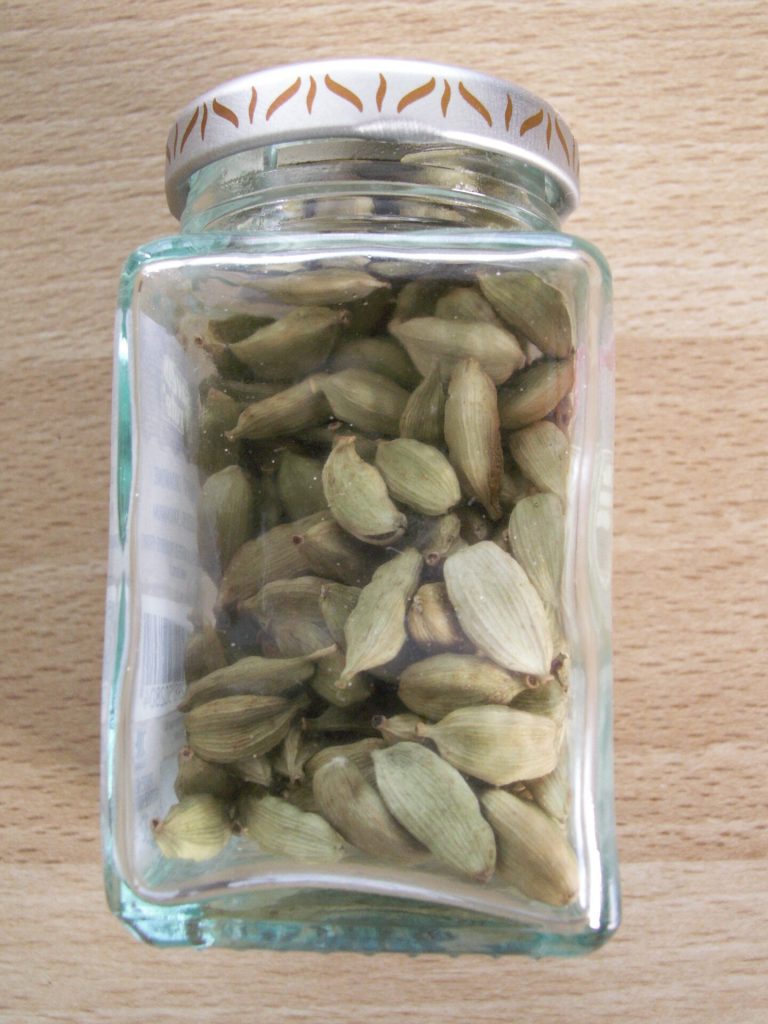
Open the cardamom listing on Markets.tz and the price field reads "not currently available." That is not a placeholder waiting to be filled in. It is the finding.
Cardamom is not a crop most people associate with Tanzania, and today that instinct is largely correct — global production is concentrated almost entirely in Guatemala and India, with Tanzania contributing a fraction of a percent of world output. But the absence of a Tanzania cardamom price is not simply "Tanzania doesn't grow this." It is the tail end of a much stranger story: Tanzania used to be one of the biggest cardamom producers on earth, and the infrastructure that would let anyone track its price today collapsed more than 40 years ago.
A colonial-era crop that briefly went global
Cardamom (Elettaria cardamomum) is not native to East Africa. It was introduced into Tanzania — then Tanganyika — in the early twentieth century, propagated through the German-run Amani Botanical Garden in the East Usambara Mountains, in what is now Tanga Region. From a single research plot, the crop spread across smallholdings around Amani and became, in the words of the agronomist who documented it in 1971, of "increasing economic importance" to the surrounding highlands.
By the mid-1970s that spread had produced a genuinely significant industry. The East Usambaras were turning out roughly 760 tonnes of cardamom a year — about a fifth of total world production at the time — which made Tanzania the third-largest cardamom producer on the planet, behind only India and Guatemala. Formal cooperative societies and marketing boards handled the crop, collecting from smallholders and channeling it into export.
The collapse nobody tracked
That system did not survive the 1980s. Tanzania's cardamom marketing boards and cooperative structures were dismantled by 1984, and production fell off a cliff alongside them — down to roughly 127 tonnes by the mid-1980s, a sixth of its 1970s peak. By 2002, researchers documenting cardamom cultivation in the East Usambara nature reserve buffer zones put Tanzania's output at around 560 tonnes, against Guatemala's roughly 19,000 tonnes in the same period. The gap has only widened since: current FAOSTAT-derived estimates put Tanzanian cardamom production around 800 tonnes a year, an amount so small it registers as roughly the world's eighth-largest producer while accounting for well under half a percent of global output. Tanzanian cardamom export value tracked through UN Comtrade fell from around $716,000 in 2019 to around $561,000 in 2023 — a rounding error next to Guatemala's roughly $497 million in cardamom exports in 2024 alone.
Crucially, the crop never actually disappeared from the ground. Surveys of the East Usambaras have found that a majority of highland farming households there still grow cardamom, typically on plots of around a hectare, and that it can account for something like a third of household income and more than half of cash-crop earnings for those families. What disappeared was the marketing infrastructure. Without cooperative societies or a board to channel it, cardamom now moves informally to middlemen, at prices researchers have found ranging from roughly $2.30 per kilogram for farmers with poor market access up to $5.70 per kilogram for those able to sell directly in Dar es Salaam — a spread wide enough that no single number could honestly represent "the" Tanzania cardamom price even if someone were collecting one. Nobody is. Tanzania's formal spice-export statistics and institutional attention are dominated overwhelmingly by cloves, which account for the large majority of the country's spice export value; cardamom, at its current scale, has not been worth building separate market-reporting infrastructure around since the 1980s.
Why the countries that do have a price look nothing like this
The contrast with the two countries that actually set the global cardamom price is instructive. In India, which supplies roughly a fifth of world output and where Kerala alone accounts for 60–70% of the country's green cardamom, price discovery runs through a regulated system of licensed e-auctions at centers such as Vandanmedu, Kumily and Bodinayakanur, overseen by the government's Spices Board — sealed, time-limited bidding that produces a public daily benchmark, reinforced since July 2025 by cardamom futures contracts on the Multi Commodity Exchange. Guatemala, which supplies well over a third of world production and more than half of global export value, has no equivalent public auction; its roughly 350,000 smallholders, most farming under ten acres in the Alta Verapaz cloud forest, sell into a multi-tiered chain of private intermediaries. But because Guatemala's volume is so large, its de facto farmgate and FOB pricing still functions as a global reference point that trade press and buyers quote as a matter of course.
Tanzania has neither mechanism. It lacks the export volume that makes Guatemala's private-market pricing a usable global signal, and it lacks the organized auction system that makes India's pricing a public one. A tradeable benchmark price needs at least one of those two things — scale or institutional infrastructure — and Tanzanian cardamom currently has neither, for reasons that trace back to a set of cooperative boards that stopped functioning during the Nyerere-era economic transition of the 1980s and were never rebuilt for a crop this small.
None of this means Tanzanian cardamom is unavailable to buyers. It means it trades the way most genuinely minor-origin specialty crops do: negotiated shipment by shipment, without a published reference price to anchor the conversation. Until Tanzania's cardamom volumes grow enough to justify formal market infrastructure, or someone builds a dedicated reporting mechanism for a crop this size, "not currently available" is the most accurate number this platform can put on the page.
- CARDAMOM IN TANZANIA (Rijkebusch, 1971) — https://ishs.org/ishs-article/21_24/
- Small Cardamom—Precious for People, Harmful for Mountain Forests, Mountain Research and Development 26(2), 2006 — https://bioone.org/journals/mountain-research-and-development/volume-26/issue-2/0276-4741(2006)26%5B131:SCFPHF%5D2.0.CO%3B2/Small-CardamomPrecious-for-People-Harmful-for-Mountain-Forests/10.1659/0276-4741(2006)26%5B131:SCFPHF%5D2.0.CO%3B2.full
- Tanzania Cardamom: Suppliers & Market Trends, Tridge — https://www.tridge.com/tridge-woods/cardamom/TZ
- Guatemala Strengthens Position as No. 1 Cardamom Exporter Worldwide, Guatemala Portal — https://www.guatemalaportal.com/guatemala-strengthens-position-as-no-1-cardamom-exporter-worldwide/
- Guatemalan Spice Farmers Forge Path to Fair Pay, Heifer International — https://www.heifer.org/blog/guatemalan-spice-farmers-forge-path-to-fair-pay.html
- Cardamom auction, E-auction, Thekkady, Idukki, Kerala, India, Kerala Tourism — https://www.keralatourism.org/periyar/e-auction-cardamom-kumily.php
- Kerala Cardamom Market: Prices & Export Trends, Farmonaut — https://farmonaut.com/asia/indian-spice-market-update-kerala-cardamom-auction-prices-and-export-trends-revealed
- CARDAMOM Futures Live, Dhan — https://dhan.co/commodity/cardamom-futures-summary/
- Top Guide to Cardamom Export from India, Seair Exim Solutions — https://www.seair.co.in/blog/cardamom-export-from-india.aspx