Put Down the Axe, Hang the Hive: Inside Tanzania’s Wild Honey Boom
Published 25 September 2026 · Commodities.tz Editorial
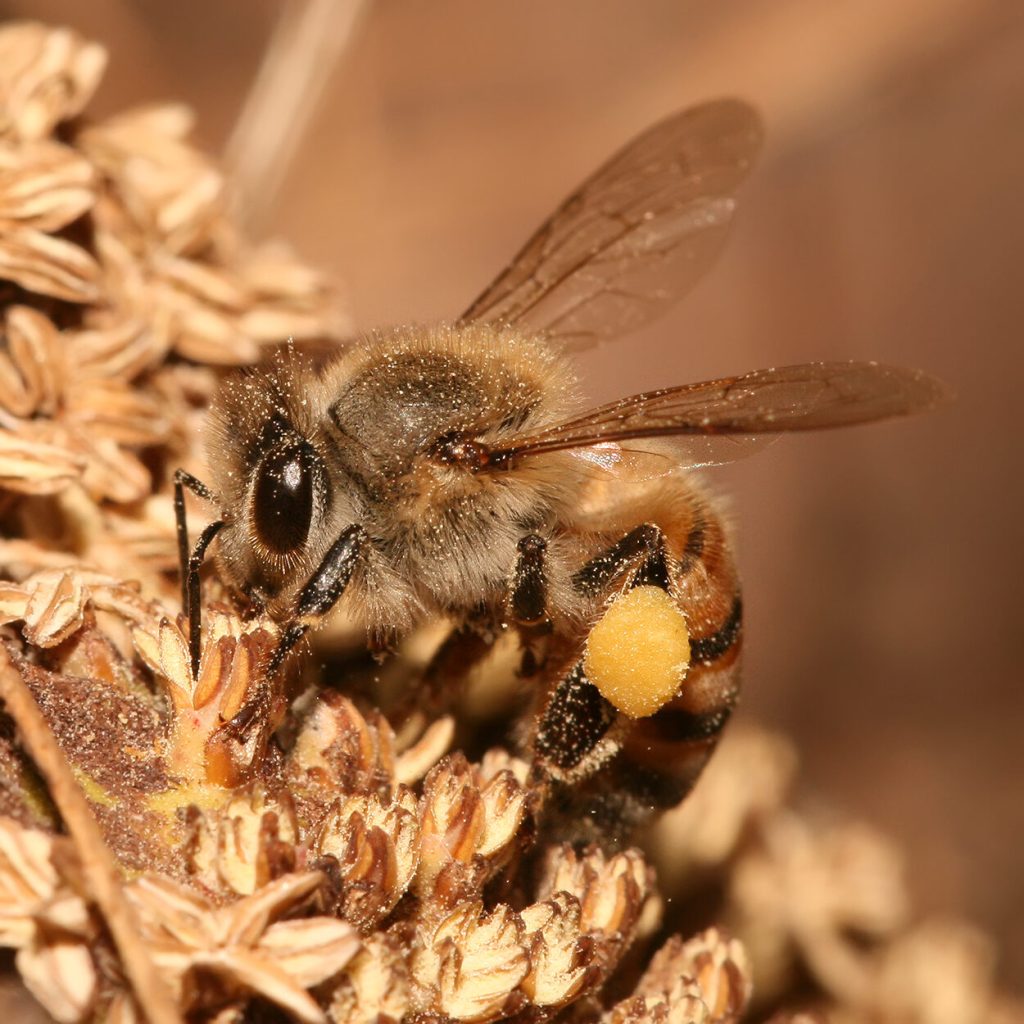
Walk into a beekeeping district in Tabora, Singida or Katavi and you will rarely find a Langstroth box. You will find a hollowed-out log or a peeled strip of bark, shaped into a cylinder and hung high in a miombo tree, left for wild colonies to occupy on their own terms. According to a 2025 survey of the national industry, roughly 90 percent of Tanzania's beehives are still this kind of traditional log or bark hive — more than 1.5 million of them, against fewer than 24,000 modern frame hives. For a country that ranks as Africa's second-largest honey producer after Ethiopia, this is not a marginal detail. It is the production system.
That matters for buyers because it cuts both ways. It is the reason Tanzanian honey and beeswax carry a genuine, structural low-input story. It is also the reason the country's honey has a persistent, well-documented quality problem that no amount of marketing language resolves.
A forest economy, not a farm economy
Tanzania's beekeeping sector is built on scale rather than intensification. The country holds an estimated 9.2 million honeybee colonies living across the roughly 55 percent of its land area covered by forest and woodland, with a theoretical production ceiling near 138,000 tonnes of honey and 625 tonnes of beeswax a year. Actual output runs far below that — production estimates cluster around 30,000 to 35,000 tonnes of honey and roughly 1,800 tonnes of beeswax annually, worth an estimated $77.5 million and contributing close to 1 percent of GDP. The sector supports around 1.2 million beekeepers and close to 2 million people across harvesting, processing and trade.
Why the gap between potential and output persists is partly cultural, not just technical. Reporting on Chemba district in Dodoma found that among 74 surveyed beekeepers, 59 percent relied entirely on traditional log hives, versus just 8 percent using modern hives exclusively — and log-hive owners were not obviously worse off financially: more of them cleared the study's earnings thresholds than modern-hive owners did. Beekeepers interviewed described honey-hunting as something learned "from their grandfathers since childhood," and noted that customary ceremonies require unfiltered honey with brood comb still in it — obtainable only from a traditional hive. A modern hanging-frame hive, meanwhile, costs upward of $51, more than many beekeepers' entire annual honey income. Modernization here isn't a simple upgrade; it competes against a functioning culture and economy that predates it.
What "wild" buys you — and what it doesn't
The upside of a wild, forest-based system is real. FAO has pointed to Africa's honeybee populations as notably resilient to parasites and disease, and to African beeswax as characteristically low in pesticide residue — an advantage rooted precisely in the fact that these are not managed apiaries dosed with miticides and supplementary feed, but wild colonies foraging across untreated woodland. For a buyer building a provenance story, that is a legitimate claim: this honey is close to organic by default, because nobody is farming the bees intensively enough to need agrochemicals in the first place.
What it doesn't buy you is consistency. "Wild" and "traceable" are not the same thing, and a hive nobody manages is also a hive nobody standardizes.
The moisture problem
Moisture content is the single most consequential quality metric in honey trade, because it determines whether honey ferments in storage or holds up on a six-month shipping and shelf cycle. The EU's legal ceiling is 20 percent moisture. Tanzanian honey routinely tests above it. One compliance-focused study of Tanzanian honey samples found several exceeding 21 percent moisture, with the worst case reaching 27.9 percent; honey from stingless bees, also commercially harvested in Tanzania, tested even higher, in a 24.6-30.9 percent range.
The cause traces directly back to the hive system. Log and bark hives are opened by cutting comb out with a knife over an open smoky fire, not by spinning ripe, capped comb through a centrifugal extractor. Harvesters working wild trees can't always wait for bees to fully cap and dehydrate a comb before taking it, and there is rarely a refractometer in the field to tell them whether a given batch is ready. The result is honey that is often unfiltered, uncentrifuged and harvested before it's fully ripe — which is precisely what gives it the "raw, wild-forest" character some markets pay a premium for, and precisely what pushes its moisture reading past the threshold that other markets use to reject it. It's the same practice producing both effects at once.
A genuine export surge, with an asterisk
None of this has stopped Tanzania's export numbers from moving sharply upward. Figures presented to the National Assembly show honey export volume rising from 951.6 tonnes in 2024 to 1,596.8 tonnes in 2025, with earnings up 68.4 percent to roughly TZS 19.2 billion; an earlier-year snapshot showed export volume up 206.9 percent year-on-year by April 2025 alone. Tanzania's Minister for Natural Resources and Tourism, Dr Ashatu Kijaji, credited the gains to "ongoing government efforts to strengthen the beekeeping sector, improve honey quality and expand access to foreign markets," and cited a 97 percent average compliance rate with EU standards over three consecutive years, crediting a national chemical-residue monitoring system with opening doors in the US, UK, China and UAE alongside the EU. An EU-funded initiative, the Beekeeping Value Chain Support project run by Enabel and the International Trade Centre, is backing that push with quality-management training, packaging support and export-compliance coaching. The government's own ten-year plan — carrying the evocative name "Achia Shoka, Tundika Mzinga," Swahili for "put down the axe, hang the hive" — targets tripling honey production to 75,000 tonnes and lifting the export share of output from 5 to 30 percent by 2035.
The asterisk: trade-compliance trackers including AGRINFO, which monitors the EU's public-health lists of authorized third countries, recorded Tanzania's removal from the EU's Annex I list of countries approved to export composite bee products in February 2025 — a distinct regulatory category from raw honey, but a reminder that a single compliance narrative and a single regulatory status are not the same thing, and that both can be true simultaneously: expanding market access on one product line, a lapsed authorization on another.
What it means for buyers
Tanzania offers real scale, a defensible low-input origin story, and a government actively investing in the compliance infrastructure that has historically been the country's weak point. None of that substitutes for lot-level testing. Regional origin — Tabora versus Singida versus Katavi — says something about forest type and forage, but nothing reliable about a specific batch's moisture reading, because the variable that determines moisture is harvesting practice, not geography. Buyers sourcing from Tanzania should treat the "wild forest honey" story as a genuine asset, and treat every shipment's moisture certificate, and its exporter's current Annex I or equivalent authorization status for the specific product category being traded, as a separate, non-negotiable check.
- Status of Beekeeping Industry in Tanzania: Resources, Practices, and Conservation — https://pmc.ncbi.nlm.nih.gov/articles/PMC12940826/
- World Bee Day 2025: Africa honey production has highest global growth rate — FAO — https://www.fao.org/newsroom/detail/world-bee-day-2025--africa-honey-production-has-highest-global-growth-rate/en
- For Tanzania's traditional beekeepers, modern hives just don't buzz — Mongabay — https://news.mongabay.com/2023/01/for-tanzanias-traditional-beekeepers-modern-hives-just-dont-buzz/
- Bee Resources — Tanzania Forest Services Agency — https://tfsdemo.nature-reserves.go.tz/index.php/resources/bee_resources
- What requirements must honey comply with to be allowed on the European market? — CBI — https://www.cbi.eu/market-information/honey/what-requirements-should-your-product-comply
- Tanzania Honey Export and Standards to the European Union — https://www.academia.edu/25883534/TANZANIA_HONEY_EXPORT_AND_STANDARDS_TO_THE_EUROPEAN_UNION
- Public health lists of countries that can export animal products to the EU – mid-2026 update — AGRINFO — https://agrinfo.eu/book-of-reports/public-health-lists-of-countries-that-can-export-animal-products-to-the-eu-mid-2026-update/
- TZ records sharp rise in honey exports — Daily News — https://dailynews.co.tz/tz-records-sharp-rise-in-honey-exports/
- Tanzania's beekeeping sector booms amidst growth in market access, reforms — The Citizen — https://www.thecitizen.co.tz/tanzania/business/tanzania-s-beekeeping-sector-booms-amidst-growth-in-market-access-reforms-5050958
- Tanzania Natural honey exports by country, 2023 — WITS/World Bank — https://wits.worldbank.org/trade/comtrade/en/country/TZA/year/2023/tradeflow/Exports/partner/ALL/product/040900