The Spice Island’s Missing Spices: What Zanzibar’s Trade Ledger Actually Shows
Published 25 September 2026 · Commodities.tz Editorial
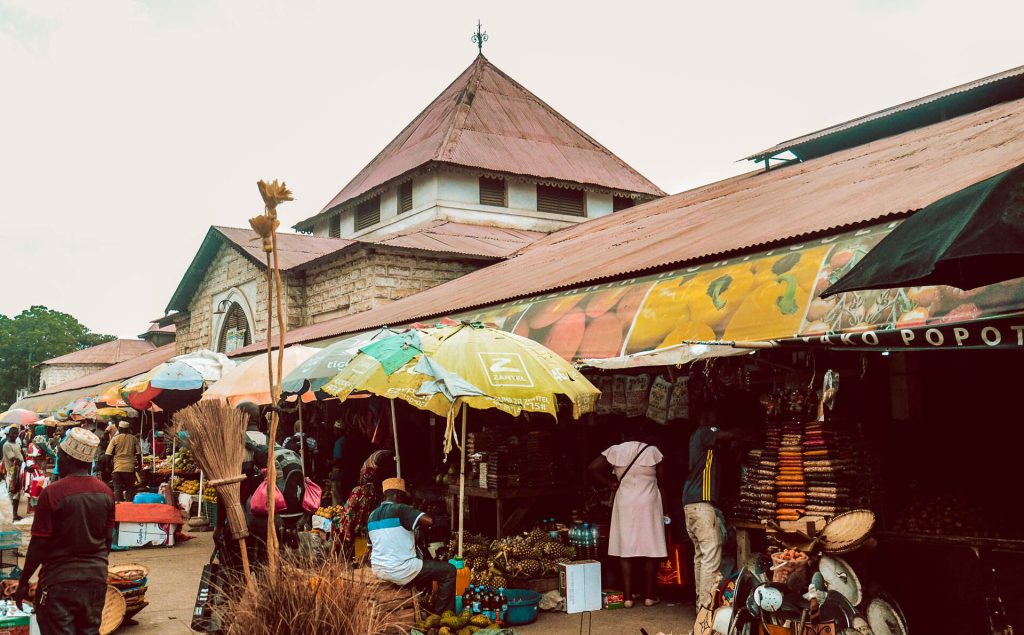
Walk a spice farm tour outside Stone Town and a guide will hand you a nutmeg still in its fruit, crack open a pepper vine's berries, and snap a stick of cinnamon bark for you to smell. It is a genuinely good introduction to what a dozen tropical spices look like growing. It is not, however, a picture of what Zanzibar or Tanzania actually sells to the world. The gap between that sensory tour and the customs data is the more interesting story, and it matters to anyone trying to source spice product out of Tanzania rather than just photograph it.
A garden built for walking, not shipping
The plots visited on a standard Zanzibar spice tour function as demonstration gardens rather than commercial plantations — a mixed planting of cloves, nutmeg, cinnamon, black pepper, cardamom, vanilla and turmeric laid out for a two-to-three-hour walk-through, not for container-scale harvest. That shift has been explicit and commercially rational: as clove output has become less reliable, tour operators have leaned harder into spice tourism as a revenue line in its own right, charging roughly $15-85 a visit. It is a sound business model. It is a different business model from spice export.
One crop carries the brand
Zanzibar's actual spice trade is close to a single-commodity story: cloves. In the year to July 2024, cloves alone brought in $44.6 million, 63 percent of Zanzibar's total goods exports, as volumes jumped to roughly 7,000 tonnes from about 700 tonnes the year before and the average price climbed to $6,335.90 per tonne. But that dominance sits on a genuinely volatile base. In the twelve months to September 2025, clove export value collapsed 76 percent year-on-year, from $26.3 million to $6.3 million, as volumes fell from 3,900 to 1,200 tonnes — a decline The Citizen attributed to global oversupply from newer producing countries eroding Zanzibar's historic price premium, compounded by climate disruption. A Zanzibar State Trade Corporation official quoted in that reporting described the shift bluntly: "Traditionally, we have two clear production seasons, but these patterns have become increasingly unpredictable. Rainfall is irregular, temperatures fluctuate," with flowering cycles shifting as a result. By the most recent reporting, volumes had swung again — up to roughly 6,400 tonnes for the year to May 2026, from just 700 tonnes the year before, with clove receipts jumping more than twelvefold to $41.5 million. This is a market that can move by an order of magnitude in either direction inside twelve months. Whatever else "Spice Island" means as a brand, cloves are the only part of it currently doing real export volume — and even that part is a wild ride, not a stable base.
None of this is Zanzibar-specific bad luck; it is the predictable result of a 200-year-old monocrop structure. Sultan Said bin Sultan introduced cloves to the islands in 1818, moved his Omani court to Stone Town in 1840, and built clove plantations using enslaved labor to feed European and North American demand for a preservative spice — a policy so successful that by the mid-19th century Zanzibar was the world's leading clove producer. That single decision, two centuries ago, is still the reason a buyer researching "Tanzanian spice exports" today is mostly researching one crop grown on two islands.
The pepper that isn't from Zanzibar at all
The other spices on the demonstration-farm tour barely register in trade statistics, and the ones that do often aren't from Zanzibar in the first place. Tanzania's national pepper exports — tracked separately by the Observatory of Economic Complexity, which compiles UN Comtrade data — totaled $2.4 million and 737.8 tonnes in 2024. That's a real year-on-year jump of roughly 196 percent off a small base, but it still leaves Tanzania ranked around 30th among world pepper exporters, holding roughly 0.2 percent of global export share. And the crop behind that number is not primarily a Zanzibar product: commercial black pepper in Tanzania is grown mainly on the mainland, in the Tanga, Morogoro and Mbeya regions, with organic, traceable pepper from smallholder cooperatives in Tanga's Kilindi district near the Kenyan border. Pepper reached those regions via German colonial-era plantings in the 1890s — a completely different introduction story, in a completely different part of the country, from the Omani clove economy that built Zanzibar's reputation. Cinnamon and nutmeg fare worse in the data: neither shows up as a distinct, trackable Tanzanian export line at meaningful volume in the same trade sources that clearly capture cloves and pepper, which is itself informative — it suggests these crops remain garden and domestic-market items rather than developed export industries, whatever their presence on the tourist trail.
A name borrowed from somewhere else
There's a deeper irony in the branding. Nutmeg — one of the signature stops on every spice tour — is not native to Zanzibar at all. The tree originates from ten small volcanic islands roughly 2,000 kilometers east of Java: Indonesia's Banda Islands, the actual historic "Spice Islands" that drove Portuguese, Dutch and English colonial competition from the 16th century onward, when nutmeg sold for prices comparable to gold. Zanzibar's nutmeg trees are 19th-century transplants, introduced as a diversification crop alongside cloves, cinnamon and pepper under the same Omani sultanate that built the clove economy. Zanzibar earned its "Spice Island" name honestly through cloves; it borrowed the rest of the identity — nutmeg above all — from a trade network whose real center of gravity was, and still partly is, on the other side of the Indian Ocean.
What this means for buyers
For a serious sourcing audience, the practical read is straightforward. Tourism has become the larger and steadier earner for Zanzibar by a wide margin — arrivals topped 885,000-949,000 in the most recent reporting years, against clove export receipts in the tens of millions of dollars — so the demonstration-garden model isn't going anywhere, and won't be scaled into commercial supply on its own. Clove remains a real, if increasingly unpredictable, export commodity, and is covered on its own dedicated basis elsewhere. Everything else marketed under the "Spice Island" umbrella — nutmeg, mace, cinnamon, cardamom — is, on current trade evidence, a tourism narrative and a smallholder/domestic crop rather than an export pipeline. The one genuine secondary opportunity visible in the data is pepper, and it points a buyer toward mainland Tanga and Morogoro cooperatives, not toward Zanzibar's spice gardens at all. Anyone sourcing against the "Zanzibar spice" label should ask, crop by crop, whether they're buying into the clove trade, the pepper trade, or simply the tour.
- Zanzibar's clove exports plunge as global oversupply, climate shocks hit farmers — The Citizen — https://www.thecitizen.co.tz/tanzania/business/zanzibar-s-clove-exports-plunge-as-global-oversupply-climate-shocks-hit-farmers-5278776
- Zanzibar export boom masks clove concentration — Daily News — https://dailynews.co.tz/zanzibar-export-boom-masks-clove-concentration/
- Cloves, tourism lift Zanzibar exports 23pc — Daily News — https://dailynews.co.tz/cloves-tourism-lift-zanzibar-exports-23pc/
- Sultanate of Zanzibar (1856-1964) — BlackPast.org — https://blackpast.org/global-african-history/sultanate-zanzibar-1856-1964/
- Zanzibar History - Sultan Seyyid Said — https://www.siyabona.com/zanzibar-history.html
- Spices (HS: 0910) Product Trade — The Observatory of Economic Complexity — https://oec.world/en/profile/hs/spices
- Pepper — The Observatory of Economic Complexity — https://oec.world/en/profile/hs/pepper
- Organic Tanzanian black pepper (Kilindi) — Place des Epices — https://www.placedesepices.com/en/produit/poivre-noir-de-tanzanie-bio-kilindi/
- Spice Migrations: Nutmeg — AramcoWorld — https://www.aramcoworld.com/articles/2021/spice-migrations-nutmeg
- Zanzibar: Spice Farm Tour with Traditional Cooking Lesson — GetYourGuide — https://www.getyourguide.com/zanzibar-l871/zanzibar-spice-farm-tour-with-lunch-t289170/