The Whiplash Harvest: What Zanzibar’s Clove Export Swings Reveal About a One-Buyer Market
Published 25 September 2026 · Commodities.tz Editorial
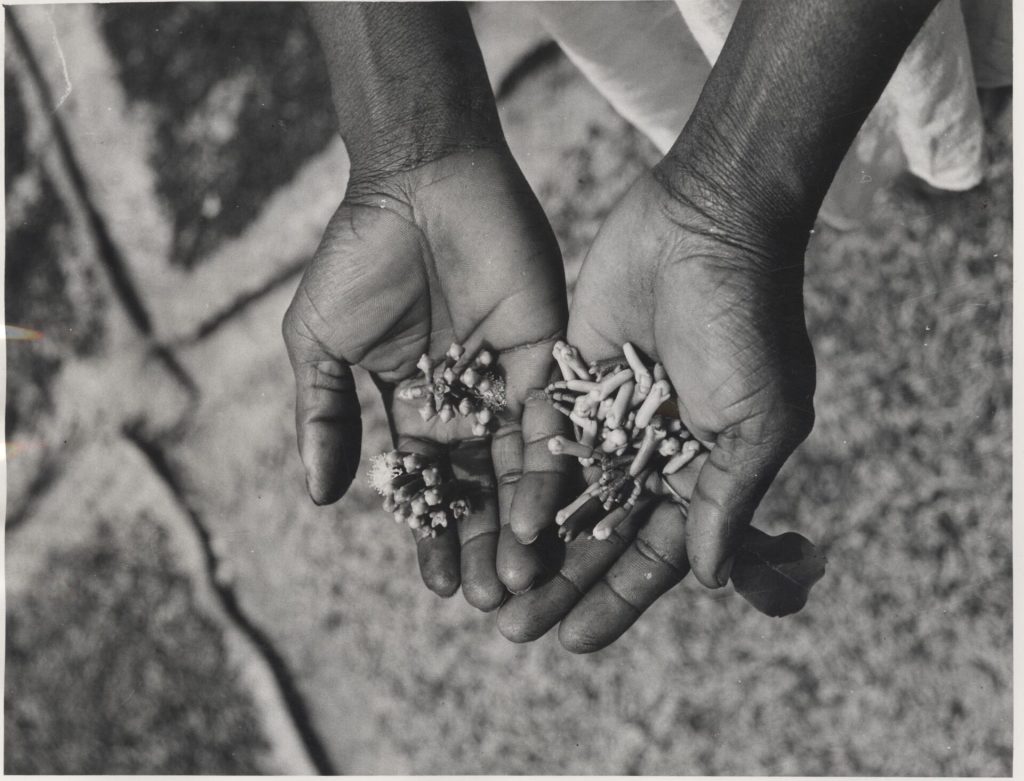
Look at Zanzibar's clove export data from the last two years and the line doesn't wobble — it falls off a cliff and then rockets back up it. In the twelve months to September 2025, export earnings collapsed 76 percent, from $26.3 million to $6.3 million, as volumes fell from 3,900 tonnes to 1,200 tonnes. Officials at the Zanzibar State Trading Corporation (ZSTC) — the government body that is, by law, the only entity permitted to buy and export cloves from the isles — blamed a mix of erratic weather and a suddenly crowded world market. Ali Mohamed, ZSTC's public relations officer, told The Citizen that "rainfall is irregular, temperatures fluctuate, and flowering cycles are shifting," and that new producer countries had eroded the premium Zanzibar cloves once commanded.
Then, by the twelve months to June 2026, the picture had reversed just as sharply. Bank of Tanzania figures reported in Zanzibar's Daily News showed clove export earnings reaching $44.6 million — 63 percent of all Zanzibar's goods exports — on volumes that climbed roughly tenfold to 7,000 tonnes, with the average export price up 33.8 percent to $6,335.90 per tonne. A single crop, still overwhelmingly grown by smallholders on Pemba island and sold through a single state buyer, had gone from crisis to boom inside less than a year of rolling twelve-month data.
Some of that swing is simply agronomy. Clove trees (Syzygium aromaticum) are notoriously irregular bearers: young trees tend toward a two-year cycle of heavy and light crops, and mature trees settle into an even less predictable three-year rhythm, according to the horticultural reference compendium PROSEA (Plant Resources of South-East Asia). Layer erratic rainfall and shifting flowering windows — the exact symptoms ZSTC's Mohamed described — onto that biological cycle, and a bad year can compound into a very bad year, followed by a very good one as trees that skipped a harvest come back into heavy bearing. This is not unique to Zanzibar; Indonesia and Madagascar, the world's two largest producers, entered 2026 with clove stockpiles at multi-season lows after several years of poor harvests tied to La Niña weather patterns, according to industry trade reporting.
But weather and tree biology don't fully explain why Zanzibar's swings look so much sharper than the broader market's. The deeper structural story is the marketing system itself. After the 1964 revolution, Zanzibar's government nationalized land and trade, and the 1985 Clove Marketing Law made ZSTC the sole legal buyer and exporter of cloves in the isles — a monopoly that has survived more than a quarter-century of nominal trade liberalization elsewhere in Tanzania's economy. Research published by UNU-WIDER on the determinants of Zanzibar's clove exports notes that the corporation continued to resist loosening its grip on what remains one of the isles' most visible foreign-currency earners, even as farmers complained that ZSTC's fixed farm-gate prices ran well below what the crop was worth on export markets. That gap has long fed an informal cross-border trade in cloves smuggled toward Kenya, where growers can fetch prices the state monopoly doesn't match — a pattern documented for years by researchers and journalists covering the sector, despite Zanzibar law providing for severe penalties against smuggling.
A single-buyer system like this doesn't just set a price; it becomes the channel through which every shock — a bad flowering season, a competitor glut, a currency move — has to pass before it reaches the roughly tens of thousands of smallholder households whose income depends on the crop. When ZSTC's administered price lags the world market on the way down, farmers have less reason to harvest and deliver cloves through official channels, pushing measured export volumes down faster than actual production may have fallen. When the price catches up or global prices spike, the reverse happens, and volumes appear to surge as cloves that might otherwise have leaked into informal trade get channelled back through the official buyer. None of this shows up cleanly in trade statistics as a "monopoly effect" — it shows up as volatility that looks larger than the underlying agricultural story alone would predict.
It's also worth sizing Zanzibar's position in the market it depends on so heavily. Global production data compiled from FAO figures puts Indonesia far in the lead — commonly cited around 135,000 tonnes a year, roughly 73 percent of reported global output — followed by Madagascar at around 25,000 tonnes, with Tanzania a distant third at under 10,000 tonnes in recent FAO-reported years, alongside Comoros. That is a striking reversal from the 1960s, when Zanzibar averaged roughly 11,000 tonnes a year and was, by a comfortable margin, the world's largest clove producer, ahead of both Indonesia and Madagascar at the time, according to the PROSEA historical record. Zanzibar didn't just lose market share to new entrants; it lost the position it invented.
The demand side compounds Zanzibar's exposure. Indonesia is not only the dominant producer but also the dominant consumer, because its kretek clove-cigarette industry has historically absorbed around 90 percent of the country's own harvest, according to World Bank research on the sector, with manufacturers needing to supply more than 300 billion cigarettes a year to the domestic market. That means Indonesia's export behavior — how much of its harvest it keeps at home for kretek versus releases abroad — has an outsized effect on the residual world price that Zanzibar, selling almost entirely for export into spice, flavor, and pharmaceutical uses, has to take as given. Zanzibar is a price-taker in a market whose largest player barely trades on world terms at all.
For buyers and researchers watching Clove.tz's data on Zanzibar's export unit values, the lesson of the last two years isn't that cloves are simply a volatile commodity — most agricultural commodities are. It's that Zanzibar's version of that volatility is amplified by a sixty-year-old marketing structure layered on top of ordinary crop cycles and a world market Zanzibar no longer sets the terms for. ZSTC's recent rollout of a digital system for farmer registration, payments, and delivery records may improve transparency and reduce leakage inside the existing structure. Whether it changes the underlying price-transmission problem — the gap between what ZSTC pays and what the world market says cloves are worth — is a separate question, and one the next full harvest cycle should start to answer.
- Zanzibar's clove exports plunge as global oversupply, climate shocks hit farmers — The Citizen — https://www.thecitizen.co.tz/tanzania/business/zanzibar-s-clove-exports-plunge-as-global-oversupply-climate-shocks-hit-farmers-5278776
- Zanzibar export boom masks clove concentration — Daily News — https://dailynews.co.tz/zanzibar-export-boom-masks-clove-concentration/
- Determinants of Clove Exports in Zanzibar: Implications for Policy — UNU-WIDER Working Paper 2022/54 — https://www.wider.unu.edu/sites/default/files/Publications/Working-paper/PDF/wp2022-54-determinants-clove-exports-Zanzibar-implications-policy.pdf
- Syzygium aromaticum — PROSEA (Plant Resources of South-East Asia) — https://plantuse.plantnet.org/en/Syzygium_aromaticum_(PROSEA)
- Indonesia Clove Harvest Season 2026: Supply & Price Forecast — https://pratamaspicesid.com/indonesia-clove-harvest-season/
- Clove Production by Country 2026 (FAO-derived) — World Population Review — https://worldpopulationreview.com/country-rankings/clove-production-by-country
- Which Country Consumes the Most Cloves in the World? — Sunday Guardian Live — https://sundayguardianlive.com/trending/which-country-consumes-the-most-cloves-in-the-world-check-the-answer-here-291516/