Coffee Goes to Auction, Cashews Go to an App, Cloves Go to the State: Four Ways Tanzania’s Export Crops Reach a Buyer
Published 28 September 2026 · Commodities.tz Editorial
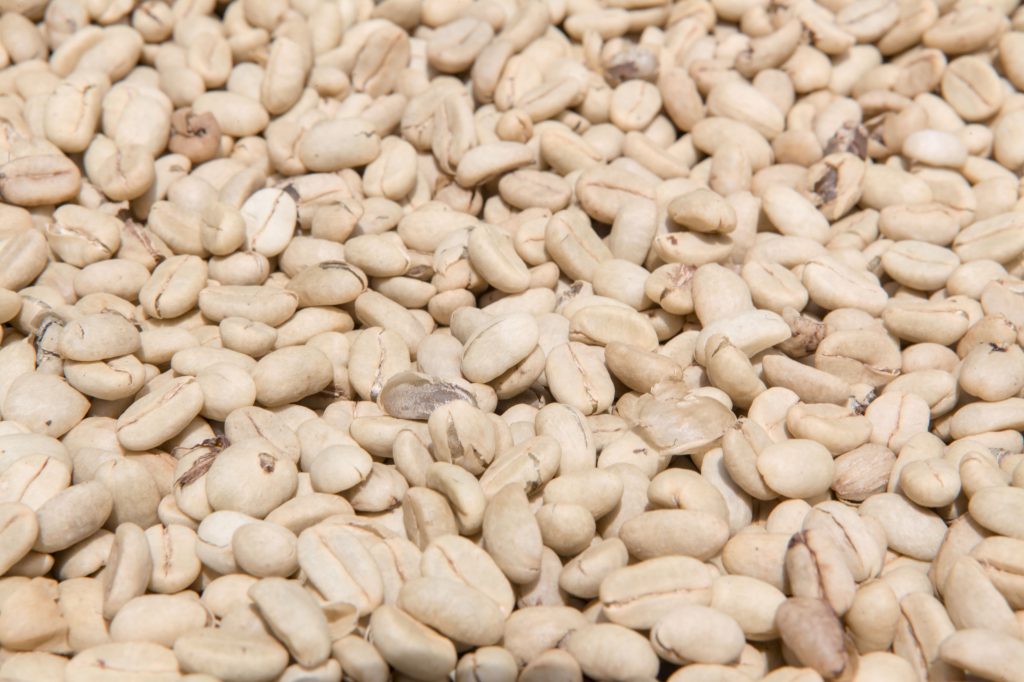
Same country, four different transactions
A buyer trying to source Tanzanian coffee registers a contract with a government board and either bids at a weekly auction or negotiates directly with a cooperative. A buyer trying to source Tanzanian cashews logs into a mobile-linked online trading system and competes for a warehouse lot in a 60-second timed auction. A buyer trying to source Zanzibar cloves cannot buy from a farmer at all — by law, there is exactly one seller. A buyer trying to source Tanzanian cocoa can, in practice, just drive to Kyela and negotiate at the farm gate, because no institution stands between grower and exporter.
These are not four variations on the same system. They are four different systems, built by different laws in different decades for different reasons, and they produce four different buyer experiences — different price transparency, different counterparty risk, different paperwork, different speed. This is a survey of that structure: what each system actually requires of a buyer, and what the differences reveal about how Tanzania regulates (or doesn’t regulate) its export crops.
Coffee: three legal channels, one regulator
Coffee is the most heavily proceduralized of the four. Under the Coffee Industry Act No. 23 of 2001 (as amended in 2009) and the Coffee Industry Regulations of 2013, the Tanzania Coffee Board (TCB) licenses every buyer, exporter and warehouseman in the chain and operates three distinct, legally defined marketing channels, according to TCB’s own trading manual and USDA’s 2024 Coffee Annual report on Tanzania.
The first is farm-gate sale: roughly 90% of Tanzania’s coffee comes from about 320,000 smallholders, who sell parchment or cherry to licensed private buyers or cooperatives (AMCOS). The second is the auction: coffee lots, warehoused and sampled under TCB supervision, are sold in USD by 50kg unit to registered buyer-traders on a trading floor. What’s less commonly reported is that this is no longer a single Moshi-only event — USDA’s June 2024 report documents six regional “Zonal Coffee Auction” sites (Kigoma, Mara, Kagera, Mbeya/Songwe, Ruvuma, and a “Kaskazini” zone covering Kilimanjaro, Arusha, Manyara, Morogoro and Tanga) running alongside the historic centralized Moshi auction, each with its own season-opening date. The third channel is direct export: TCB allows premium producers and cooperatives to register contracts with overseas buyers and bypass the auction floor entirely, a policy meant to let growers build long-term relationships with roasters rather than sell anonymously into a pooled sample lot.
What all three channels share is TCB’s paper trail: every warehouse issues a numbered “coffee storage warrant,” every buyer pays a seasonal sample fee, every sale is subject to a research cess and a 1% export levy, and payment discipline is enforced with interest penalties and licence suspension for late-paying exporters. A buyer’s experience differs sharply depending on which of the three doors they use, but all three doors are inside the same regulatory building.
Cashew: the warehouse receipt goes digital
Cashew runs on a different logic entirely: instead of a physical trading floor, Tanzania has digitized the warehouse receipt. Under the 2025/26 trading procedure jointly issued by the Tanzania Mercantile Exchange (TMX), the Cashewnut Board of Tanzania (CBT) and the Warehouse Receipts Regulatory Board (WRRB), a buyer must first hold a CBT buying licence for the season, then register on TMX’s Online Trading System (OTS) via a Buyer Declaration Form. Raw cashew, deposited by farmers through their primary cooperative societies, is graded and entered into a sale catalogue built from verified warehouse stock data — released to bidders at least 12 hours before each auction. Each lot then sells in a genuinely fast, timed process: 60 seconds of live bidding plus a 40-second top-up window, sold “all or none.” Winning buyers collect an invoice from the cooperative union within 24 hours, must pay within 120 hours, and have 14 days to physically collect the cargo, which they’re entitled to inspect before signing off.
This is the same warehouse-receipt logic used for coffee’s storage warrants, but executed as a live online auction rather than a floor-traded catalogue sale, and administered by a commodity exchange (TMX) rather than a single-crop board acting alone. TMX itself was incorporated in 2014 and began trading (in sesame) in 2019; cashew joined on 9 October 2020, with warehouses concentrated in Lindi, Ruvuma, Pwani and Mtwara. cashews.tz’s existing coverage goes deep on how farmers’ crops get priced and graded inside this system — the point here is structural: a buyer needs a CBT licence, a TMX login and 24–120 hours of working capital discipline, not a seat on a physical trading floor.
Cloves: no auction, no negotiation, one seller
Zanzibar cloves sit at the opposite end of the spectrum from cashew’s competitive digital auction. The Zanzibar State Trading Corporation (ZSTC) is, by law, the sole legal buyer and exporter of cloves on the islands, a monopsony that traces to the 1981 Clove Market Law. A recent report confirms this is still the live arrangement, not a historical footnote: in a 27 November 2025 article on Zanzibar’s clove-export slump, a ZSTC spokesperson told The Citizen, “we buy all the cloves directly from farmers and sell them internationally” — describing a present-tense, ongoing exclusivity, not a legacy structure being phased out. There is no bidding, no competing buyer, and no direct farmer-to-exporter channel; a foreign buyer’s only route to Zanzibar cloves is a purchase contract with ZSTC itself. spices.tz’s “Why You Can’t Just Buy Cloves Directly From a Zanzibar Farmer” covers the mechanics of that system in depth and is the right link for readers who want the ZSTC buying-price and quota detail; what matters for this comparison is simply that cloves are the one crop in this survey with zero market competition by design.
Cocoa: no board, no auction, no floor at all
Cocoa is the fourth model, and it is close to the absence of a model. More than 95% of Tanzania’s roughly 6,500-tonne annual cocoa crop is grown by smallholders on plots under a hectare in Kyela and Rungwe districts (Mbeya region), bordering Lake Malawi. There is no cocoa marketing board, no licensed-buyer regime and no central auction comparable to Moshi or TMX. Reporting from How We Made It In Africa on Tanzania’s specialty-cocoa exporters describes smallholders selling directly from farms for export, with private buying companies (often fermenting and export-focused firms working with international chocolate makers) contracting straight with farmers or small farmer groups. REPOA’s research on Tanzania’s cocoa sector similarly frames the trade as private and direct rather than institutionally structured. For a buyer, that means no licence to obtain and no catalogue to bid against — but also no board-set reserve price, no warehouse-warrant paper trail, and no institutional recourse if a contract goes wrong. cacao.tz’s own articles cover cocoa’s production economics; the point for this comparison is the near-total absence of the apparatus that governs the other three crops.
The comparison
| Crop | Core mechanism | Who runs it | Buyer’s entry point | Price discovery |
|---|---|---|---|---|
| Coffee | Auction (Moshi + 6 zonal sites) + registered direct-export contracts + farm-gate sale | Tanzania Coffee Board (statutory) | TCB buyer/exporter licence + registered trader names | Competitive bidding vs. TCB reserve price, referenced to NY/London futures |
| Cashew | Digitized warehouse-receipt auction (Online Trading System) | TMX + CBT + WRRB jointly | CBT buying licence + TMX registration/bid deposit | Timed live online bidding per lot |
| Cloves | State monopsony purchase | ZSTC (statutory sole buyer) | Direct purchase contract with ZSTC | Administratively set by ZSTC; no competing bid |
| Cocoa | Private direct trade | No sector-specific institution | Direct farmer/cooperative contract | Bilateral negotiation, informally referenced to world cocoa price |
What the differences actually reveal
It’s tempting to read this as a simple old-versus-new story — colonial-era boards (coffee, cloves) versus a modern exchange (cashew) versus an unregulated frontier (cocoa) — and there’s real truth in that: ZSTC’s clove monopoly and TCB’s coffee mandate both date to statutory frameworks built well before Tanzania’s post-independence commodity policy fully solidified, while TMX is an explicitly 2014-era institution designed to digitize what cashew cooperatives were already doing on paper. But the more useful reading is about what each structure is optimized for. Coffee’s three-channel system is built to let TCB simultaneously protect smallholders (via the auction floor and reserve prices) and reward quality-differentiated producers (via direct export). Cashew’s system is built for speed and transparency at high volume across a huge, geographically dispersed smallholder base. ZSTC’s clove monopoly is built for state revenue capture, not price discovery. And cocoa’s non-system is built for nothing in particular — it persists because cocoa’s volumes and value have historically been too small, relative to coffee, cashew and cloves, to attract the same regulatory attention, which is itself a real difference in how the government allocates institutional effort across crops.
For a buyer, the practical upshot is that “sourcing from Tanzania” is not one due-diligence exercise but four. A coffee buyer needs to understand TCB licensing and choose a channel. A cashew buyer needs a CBT licence and an OTS account, and needs to move fast inside a 100-second bidding window. A clove buyer needs a contract with a single state-owned counterparty and no fallback if that relationship sours. A cocoa buyer needs none of that paperwork but correspondingly less institutional protection if a farm-gate deal falls through.
A secondary thread: where the warehouse receipt is headed
The warehouse-receipt model that now runs cashew’s digital auctions did not start there. According to the Warehouse Receipts Regulatory Board’s own reporting (via The Citizen, 1 August 2026) and sector coverage on Kilimo Kwanza, the system has expanded well beyond its cashew roots: as of the 2025/26 season it covers 18 crops and products across 23 of mainland Tanzania’s 26 regions, with nine crops — including cashew, sesame, pigeon peas, coffee, cocoa, lentils, green grams and soybeans — moving a combined 1.122 billion kilograms worth TZS 2.679 trillion through the system in 2025/26 alone. Coffee’s own auction system (described above) now coexists with a smaller volume of coffee also moving through the warehouse-receipt/TMX structure. The WRRB’s stated next step is livestock, hides and seaweed in 2026/27 — a genuinely separate story this article isn’t attempting to tell.
- Tanzania Coffee Board — Trading Manual for Coffee Auction Market (draft) — https://trade.tanzania.go.tz/media/Auction%20manual%20edited.pdf — accessed 2026-09-27
- USDA Foreign Agricultural Service (GAIN) — Coffee Annual: Tanzania, Report TZ2024-0002 — https://apps.fas.usda.gov/newgainapi/api/Report/DownloadReportByFileName?fileName=Coffee+Annual_Dar+Es+Salaam_Tanzania_TZ2024-0002.pdf — published 2024-06-17, accessed 2026-09-27
- Tanzania Mercantile Exchange — Cashew Nut Trading Procedure, Trading Season 2025/26 — https://www.tmx.co.tz/assets/guidelines/2025-2026/TMX_RCN_Trading_Procedure_2025.pdf — accessed 2026-09-27
- The Citizen (Tanzania) — "Zanzibar's clove exports plunge as global oversupply, climate shocks hit farmers" — https://www.thecitizen.co.tz/tanzania/business/zanzibar-s-clove-exports-plunge-as-global-oversupply-climate-shocks-hit-farmers-5278776 — published 2025-11-27, accessed 2026-09-27
- The Citizen (Tanzania) — "Warehouse receipts system generates Sh2.3 trillion for Tanzania farmers, traders" — https://www.thecitizen.co.tz/tanzania/news/national/warehouse-receipts-system-generates-sh2-3-trillion-for-tanzania-farmers-traders-5542840 — published 2026-08-01, accessed 2026-09-27
- How We Made It In Africa — "Tanzanian cocoa business finds sweet spot in exporting to high-end chocolate makers" — https://www.howwemadeitinafrica.com/tanzanian-cocoa-business-finds-sweet-spot-in-exporting-to-high-end-chocolate-makers/141684/ — accessed 2026-09-27
- REPOA — "Supporting Tanzania's Cocoa Farmers" — https://repoa.or.tz/?publication=supporting-tanzania%E2%80%99s-cocoa-farmers — accessed 2026-09-27