From Beans to Bars: Tanzania’s Push to Process Its Own Cocoa
Published 26 September 2026 · Commodities.tz Editorial
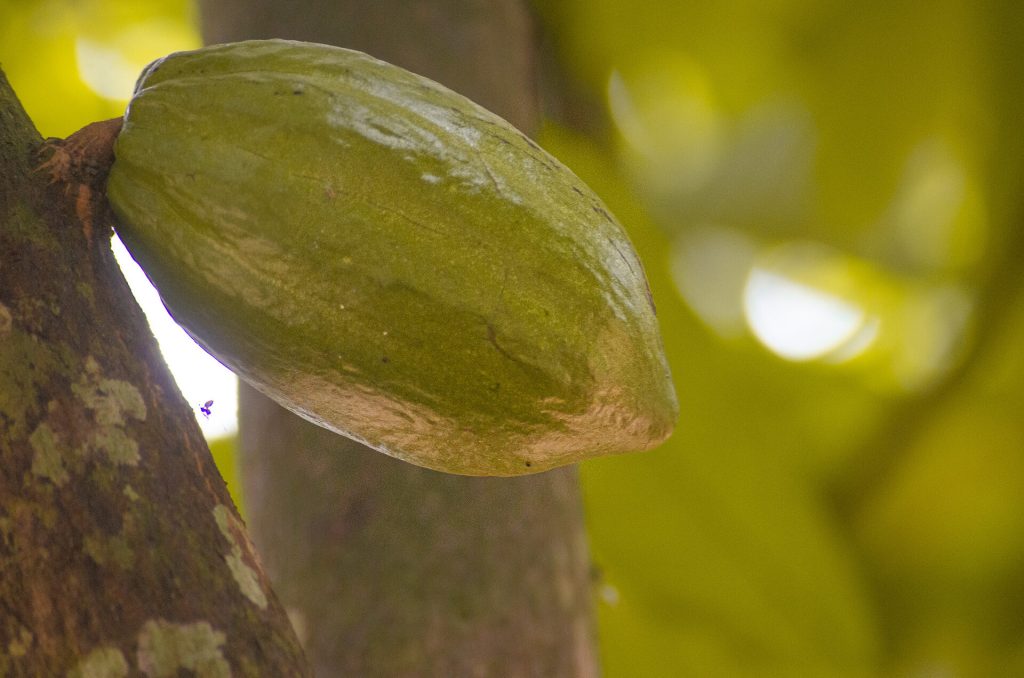
For most of its history, Tanzania’s cocoa story has ended at the port: beans grown in Kyela and Rungwe, fermented, dried, bagged and exported raw, with almost all of the value captured by whoever processes them abroad. That is now, officially, a policy problem the government says it wants to fix — and 2025–26 gave it an unusually sharp reason to move.
The price collapse that forced the issue
Cocoa farmgate prices in Tanzania fell from roughly TZS 32,000 per kilogram to about TZS 5,540 per kilogram during the 2025–26 season, driven largely by oversupply out of Ivory Coast on the world market. For a crop grown by smallholders with little price protection, that is not a soft correction — it is the kind of shock that makes “why are we still exporting raw beans” a politically live question rather than an abstract development-economics one.
The government’s response, coordinated through COPRA (the Cereals and Other Produce Regulatory Authority — Tanzania has no dedicated cocoa board of the kind Ghana or Ivory Coast run), is a five-point strategy: expanding production, increasing drying-facility capacity from 7 to 20 by mid-2026, pushing organic certification, encouraging coffee-style contract farming, and — the point that matters for this site — developing domestic processing. COPRA’s Director General, Irene Mlola, put the ambition plainly: “Even if we cannot reach 100 percent local processing in the short term, deliberate efforts must be made to develop this crop through our industries.”
What “value addition” means in dollar terms
There is a real number behind the ambition. Cocoa export earnings roughly doubled to about US$109 million in the year to January 2025, up from US$44.3 million the year before — and in April 2025 the Ministry of Agriculture signed a US$30 million memorandum of understanding with Corus International aimed at lifting cocoa and coffee output toward a target of 80,000 tonnes of cocoa by 2030, roughly five times current volumes depending on which baseline year you use.
Whether that target is realistic is a separate question from whether the policy direction is genuine, and the evidence for the latter is concrete rather than rhetorical: new drying infrastructure under construction, a named investment MOU with a dollar figure attached, and a farmer-financed processing plant already breaking ground (see our companion piece on the Kyela and Rungwe facilities). That’s different from a government press release promising modernization with no funding behind it.
A reasonable note of caution
It’s worth naming the skeptical view too, because it’s a fair one: value-addition pushes across African cocoa-producing countries have sometimes amounted to new processing statistics without a corresponding shift in who actually owns the gains — commentary on Ghana’s COCOBOD/CPC model has made this argument specifically, and it applies as a general caution to any country, including Tanzania, launching a processing push. Building a drying facility is not the same as building farmer equity in what happens after the beans leave the farm. We’ll track who actually owns and profits from Tanzania’s new processing capacity as it comes online, not just how much of it gets built.
- Price and policy details via The Citizen; export earnings and Corus International MOU via Tanzania Insight and allAfrica; skeptical framing adapted from Cocoa Diaries (writing about Ghana's COCOBOD/CPC, cited here as a general caution, not a claim about Tanzania specifically). Compiled September 2026.