Why Reliable Tanzania Cardamom Price Data Barely Exists
Published 26 September 2026 · Commodities.tz Editorial
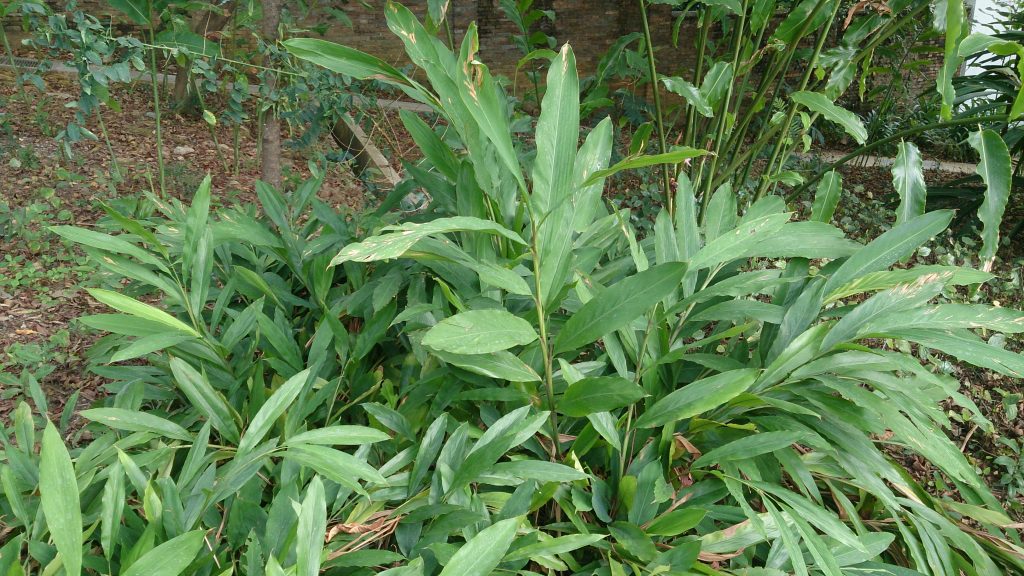
Ask for Tanzania’s current cashew export volume and there is an entire regulatory apparatus — the Cashewnut Board, the Tanzania Mercantile Exchange, published auction catalogues — built to answer that question in near real time. Ask the same question about cardamom, and the honest answer is that almost nothing comparable exists. That gap is not a research failure; it is a fact about how the crop is tracked, and it is worth explaining precisely.
What the international data systems actually show
FAOSTAT, the UN’s agricultural statistics database, does carry a Tanzania cardamom production series under its “nutmeg, mace, cardamoms” code, and as of the most recent figures compiled by trade-data platform Tridge, it shows output essentially flat — around 800 to 820 metric tonnes annually from 2019 through 2024, a level of stability across five years that is itself a signal worth reading skeptically. Genuine smallholder agroforestry crops grown on a handful of mountain districts do not typically produce output figures that barely move year to year; that pattern is more consistent with a national statistic that has not been freshly re-surveyed and is instead being carried forward with only minor adjustment. On the export side, UN Comtrade data (HS code 090831, “spices — cardamoms, neither crushed nor ground”) shows Tanzania exporting $1.29 million and 196,824 kg of cardamom in 2021, mostly to the United Kingdom, with smaller volumes to Kuwait, Iraq, Turkey and Oman; by 2023, that export value had fallen to roughly $560,000, according to the same aggregated trade data.
How thin the underlying trade actually is
The clearest evidence of how little cardamom trade there is to measure comes from transaction-level detail rather than the annual totals. Tridge’s own 2026 transaction data for Tanzania shows individual recorded shipments — for example, a 9,000 kg lot priced at $14.52/kg in March 2026, and a 16,000 kg lot at $14.60/kg in December 2025 — with only around ten total recorded transactions for the year. Tanzania does not appear in Tridge’s top-ten global cardamom exporter rankings at all. A country’s “average export price” derived from ten shipments a year is not a market price in the way a commodity exchange price is; it is closer to a handful of individual deals, any one of which can swing the reported average.
What Tanzania’s own statistics system tracks — and doesn’t
Tanzania’s National Bureau of Statistics runs an Annual Agricultural Sample Survey that does publish detailed national production figures for the country’s major cash crops — cashew, coffee, tea and cloves are tracked in its most recent published key-findings reports. Cardamom is not a line item in that survey’s headline crop tables. This is not evidence of neglect so much as scale: a spice crop concentrated in smallholdings across a narrow band of the East Usambara Mountains, grown by a specific community of farmers rather than distributed across multiple regions, is a poor fit for a national sample survey designed around the country’s major export commodities. TanTrade, the government’s trade promotion body, does include cardamom in its “Tanzania Spices” branding initiative alongside pepper, clove, ginger and cinnamon — but a branding initiative is not a price-reporting mechanism, and it does not publish its own production or export series.
Why the infrastructure that exists for cashew doesn’t exist for cardamom
Cashew’s data trail is dense because the crop has an entire regulatory architecture wrapped around it: a dedicated board, a licensing regime, a commodity exchange, and a warehouse receipt system that generates a price at every single auction lot. Cardamom has none of that. There is no cardamom marketing board, no cardamom auction, and no warehouse receipt system creating a transaction record at scale. What data exists arrives secondhand, through the customs declarations of importing countries rather than through any Tanzanian price-discovery mechanism of its own.
What this means in practice
For anyone trying to source Tanzanian cardamom or model its market, the honest position is that a reliable farm-gate price, a validated national production tonnage, or a standardized quality grading system — the kind of infrastructure that exists for cashew kernels — simply is not published anywhere. Prices quoted for “Tanzania cardamom” in global trade platforms should be read as the price of specific, individually identifiable shipments, not as a market benchmark. That is an unusual thing to be able to say plainly about a country’s export crop, and it is arguably more informative than a fabricated average would be.
- Tridge, "Tanzania Cardamom: Suppliers & Market Trends" — https://www.tridge.com/tridge-woods/cardamom/TZ — 2026-09-26
- Tridge, "Cardamom Suppliers, Export Data & Price Trends: Global Market Overview 2026" — https://www.tridge.com/market-overview/cardamom — 2026-09-26
- World Bank / WITS, "Tanzania Cardamoms exports by country, 2021" — https://wits.worldbank.org/trade/comtrade/en/country/TZA/year/2021/tradeflow/Exports/partner/ALL/product/090830 — 2026-09-26
- Tanzania National Bureau of Statistics, Annual Agricultural Sample Survey 2023/24 — Key Findings Report — https://www.nbs.go.tz/uploads/statistics/documents/en-1760643333-KEY%20FINDINGS%20REPORT_AASS%202023-24_ENGLISH.pdf — 2026-09-26